Why Restaurants Are No Longer Just Food Businesses
For decades, restaurants were defined by meals and menus. Today, the most valuable restaurant businesses operate as platforms for hospitality, community, brand equity, and commercial real estate.
By Guzlands Editorial
For decades, the restaurant business was relatively straightforward to define: acquire a location, build a kitchen, develop a menu, serve customers and make money from food and beverage sales.
That model still exists. But it no longer explains the most successful restaurant businesses.
Restaurants increasingly operate at the intersection of food, hospitality, retail, entertainment, culture, technology, community and real estate. The meal remains the core product, but the business around the meal has become significantly more important.
This is not simply a change in consumer taste. It is a structural shift in the economics of foodservice.
India's food services market is projected to grow from approximately US$90 billion in FY2026 to US$150 billion by FY2031. Organised foodservice is already estimated to represent 45–50% of the market, while online foodservice is expected to increase its share from 11% to 18% over the same period.
At the same time, consumers are becoming more selective about where and how they spend. Euromonitor's latest India foodservice analysis notes that convenience, delivery and digital ordering are increasingly important, while consumers continue to value ambience, service and engaging experiences.
The result is a more complicated but potentially more valuable restaurant business.
The Restaurant Is Becoming a Platform
The traditional restaurant has one primary transaction:
Customer → meal → payment.
The modern restaurant can have several.
Customer → meal → experience → relationship → repeat visit → community → additional purchase.
This distinction is important.
A restaurant may generate revenue through its dining room, delivery kitchen, private events, catering, retail products, memberships, collaborations, cooking classes, chef's tables or branded products.
None of these necessarily replace the restaurant. They extend it.
The physical restaurant becomes the centre of a broader commercial ecosystem.
This is particularly relevant as the cost of operating restaurants continues to increase. Euromonitor reported that India's restaurant and bar industry saw rising costs in 2024, while 2025 foodservice value growth was driven substantially by price increases rather than increased customer visits.
When the economics of the dining room become more difficult, operators have a reason to ask a broader question:
What else can this restaurant be?
Food Is the Product. Hospitality Is the Business.
There is an important distinction between food and hospitality.
Food can be evaluated relatively easily. Taste, temperature, presentation, ingredients and consistency are tangible aspects of the product.
Hospitality is broader.
It includes how a guest discovers the restaurant, makes a reservation, arrives, is greeted, seated, served, pays and leaves. It includes acoustics, lighting, comfort, pacing, service, design and the behaviour of the team.
This is why restaurants increasingly compete on factors that have little to do with the recipe itself.
Two restaurants can serve similar food at similar prices and achieve completely different commercial results.
The difference is often the experience surrounding the food.
Research from India's foodservice market supports this shift. NRAI and Frost & Sullivan data cited in a SEBI-filed industry document found that 75% of Indian consumers dine out for get-togethers or social occasions with family, friends and colleagues.
The restaurant is therefore not simply a place where people consume food.
It is a place where people spend time.
That distinction has significant commercial implications.
Restaurants Are Selling Time
One of the most underappreciated assets in a restaurant is time.
A guest might spend 45 minutes in a quick-service restaurant, two hours at dinner, three hours at a café or an entire evening at a destination restaurant.
The operator is effectively monetising that period.
This makes the physical environment important.
If a restaurant can make a guest comfortable enough to stay longer, return more frequently, bring other people or spend on additional products, the value of the physical space increases.
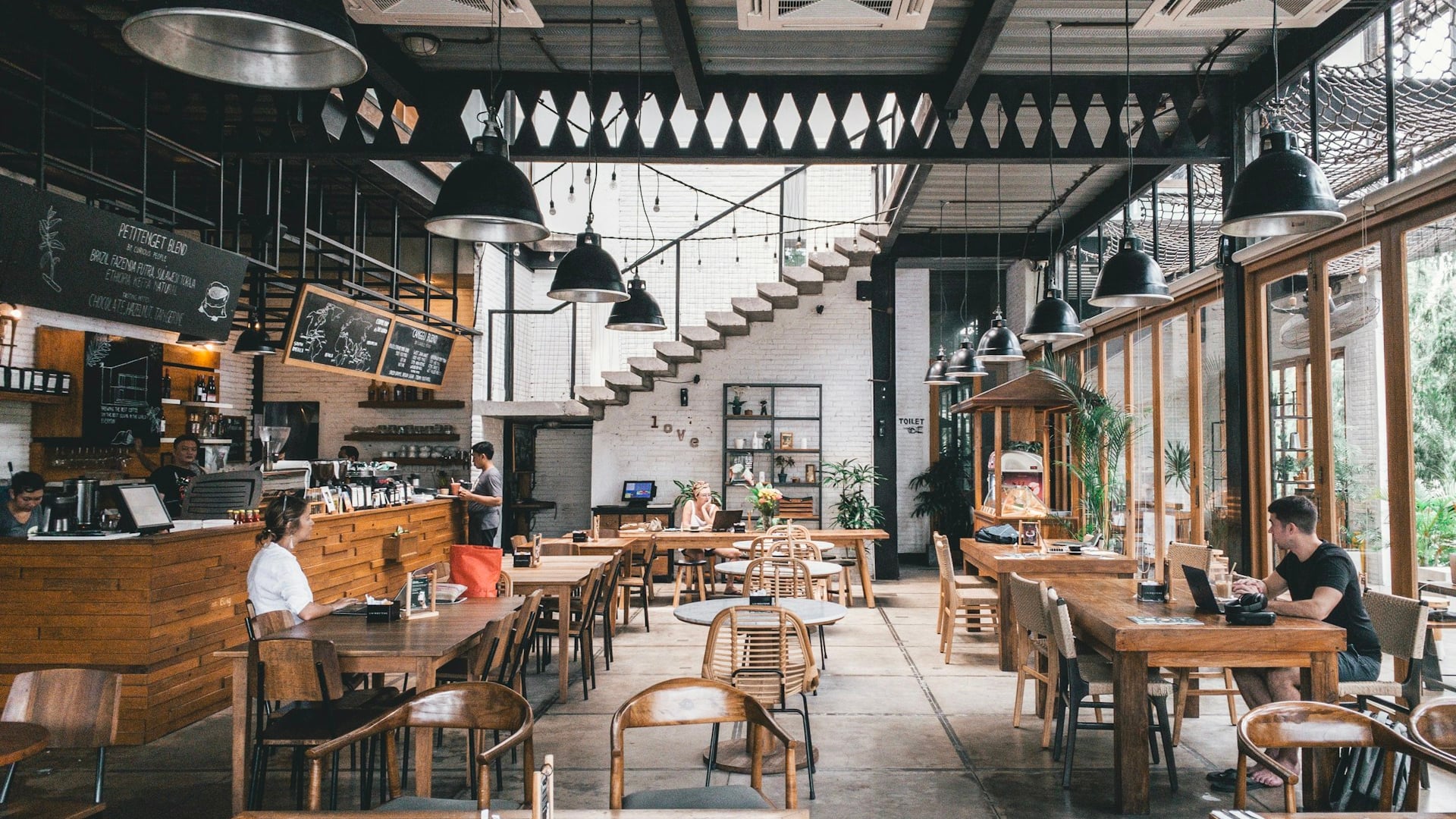
This explains the growth of restaurants that function simultaneously as cafés, workspaces, social venues, retail environments and cultural spaces.
The same table can have multiple economic purposes across the day.
Breakfast.
Work meeting.
Lunch.
Coffee.
Private event.
Dinner.
The opportunity is not necessarily to increase the number of seats. It is to increase the productivity of the space.
The Restaurant as Real Estate
This creates an interesting connection between restaurants and property.
A restaurant is not only an F&B operation. It is also an occupier of real estate.
Rent, location, frontage, access, parking, visibility, floor plate, ceiling height, outdoor space and neighbouring businesses all influence its economics.
But the relationship works both ways.
A strong restaurant can increase the value of its surrounding property.
It can become an anchor for a mixed-use development, hotel, retail destination or neighbourhood.
It can generate footfall.
It can extend dwell time.
It can create a reason for people to visit a location that previously had little destination value.
This is one reason restaurant-led developments are becoming increasingly relevant to hospitality and real estate investors.
The right restaurant can be an amenity.
The right restaurant can also be infrastructure.
Experience Is Becoming a Competitive Advantage
Experiential dining is often misunderstood as elaborate interiors, theatrical service or expensive tasting menus.
That is only one version of it.
An experience can be remarkably simple.
It could be a restaurant built around one regional cuisine.
A chef's counter.
A bakery where production is visible.
A farm-to-table restaurant connected to its own agricultural operation.
A neighbourhood restaurant with a strong community programme.
A restaurant that hosts artists, musicians or designers.
A dining room that changes its menu according to the season.
The common factor is not extravagance.
It is differentiation.
OpenTable reported increased consumer interest in experience-led dining and identified tasting menus, dinner-and-show formats and other distinctive dining occasions among the experiences attracting demand.
The commercial lesson is straightforward:
An experience gives customers a reason to choose one restaurant over another.
Restaurants Are Becoming Brands
The strongest restaurant businesses increasingly behave like brands rather than individual outlets.
This changes the value equation.
A restaurant with strong brand recognition can potentially expand into:
- Multiple locations
- Packaged food
- Retail
- Delivery
- Catering
- Events
- Hospitality partnerships
- Cookbooks
- Merchandise
- Collaborations
- Memberships
- Digital content
The physical restaurant becomes one expression of the brand.
This is particularly important for investors.
A restaurant with a strong brand can potentially be scaled without reproducing every element of the original operation. Conversely, a restaurant that depends entirely on a single chef, location or physical experience may have limited scalability.
The question is therefore not simply whether a restaurant is profitable.
It is whether the business has transferable value.
The Kitchen Is Becoming a Production Asset
Technology has also changed what a restaurant kitchen can do.
The rise of delivery, takeaway and cloud kitchens has separated food production from the traditional dining room.
A single kitchen can potentially serve several demand channels.
Dine-in.
Delivery.
Takeaway.
Catering.
Events.
Retail.
This creates opportunities for operators to use the same infrastructure more efficiently.
The challenge is operational complexity.
A kitchen designed for a 60-seat restaurant is not automatically efficient for delivery. A kitchen designed for high-volume delivery may not be appropriate for a premium dining experience.
The important question is therefore not whether a restaurant should be omnichannel.
It is whether the physical and operational infrastructure has been designed around the channels the business actually intends to serve.
The Rise of the Multi-Format Restaurant
The next generation of restaurant businesses may not fit neatly into categories such as fine dining, casual dining or QSR.
A single brand might operate:
- A flagship restaurant
- A smaller neighbourhood format
- A delivery kitchen
- A retail counter
- A catering business
- Seasonal pop-ups
- Destination events
Each format serves a different customer and occasion while reinforcing the same brand.
This is particularly relevant in India because the foodservice market remains highly fragmented and increasingly diverse.
A 2025 Grant Thornton Bharat and NRAI study found that nearly 94% of surveyed restaurant operators planned to expand into Tier II and Tier III cities, highlighting the scale of opportunity outside India's largest urban markets.
Expansion, however, does not necessarily mean copying the same restaurant into every market.
The stronger approach may be to develop formats that adapt to local demand while retaining the core identity of the brand.
The Restaurant as a Social Infrastructure
Restaurants also perform a function that is difficult to capture in a financial model: they create places for people to meet.
This matters because many modern forms of interaction have become increasingly digital.
Restaurants provide physical environments for meetings, celebrations, dates, family occasions, business discussions and informal social interaction.
The data reflects this.
Indian consumers frequently associate dining out with social occasions, while cafés increasingly serve multiple functions beyond food and beverage consumption.
For operators, this means that designing for social behaviour can be as important as designing for food production.
The size of tables.
The distance between tables.
Acoustics.
Lighting.
Seating flexibility.
Outdoor areas.
Bar positioning.
Arrival experience.
These are operational decisions, but they also influence the commercial value of the restaurant.
The Economics of Frequency
A restaurant's most valuable customer is not necessarily the person who spends the most during one visit.
It may be the customer who returns frequently.
This changes how restaurants should think about customer acquisition.
A ₹3,000 dinner once a year may be valuable.
A ₹700 customer who visits twice a month may be more valuable over time.
The second customer also creates more opportunities for the restaurant to build familiarity, trust and habit.
This is why loyalty, community and consistent brand identity matter.
The restaurant is increasingly competing not only for a customer's money but for a position in their routine.
What This Means for Restaurant Owners
Restaurant owners need to think beyond menu engineering and table turnover.
The fundamental questions are changing.
What occasion does the restaurant own?
Why should someone choose it over the alternatives?
What does the physical space enable?
How many revenue streams can the existing infrastructure support?
How often can a customer realistically return?
Can the brand exist beyond one location?
What part of the experience is genuinely difficult for competitors to replicate?
These questions are more strategic than simply asking which dishes should be added to the menu.
The menu remains critical.
But it is no longer the entire proposition.
What This Means for Investors and Developers
For hospitality investors and real estate developers, restaurants should increasingly be evaluated as commercial assets in their own right.
A restaurant can influence the performance of an entire property.
In a hotel, it can attract non-resident customers.
In a mixed-use development, it can generate footfall.
In a retail project, it can increase dwell time.
In a destination development, it can become a primary reason to visit.
This makes restaurant selection a strategic development decision rather than simply a leasing decision.
The right operator can create significant value.
The wrong operator can do the opposite.
The Future Restaurant Business
The restaurant of the future will not necessarily be larger, more expensive or more technologically advanced.
It will be better designed around the customer and the economics of the business.
Some restaurants will focus almost entirely on convenience.
Others will compete on experience.
Some will build scalable brands.
Others will remain highly local and independent.
Some will operate primarily through delivery.
Others will deliberately make the physical dining room the centre of the proposition.
There is no single winning format.
What is changing is the definition of the business itself.
The restaurant is increasingly becoming a platform for food, hospitality, experience, community and commerce.
For operators, this creates more complexity but also more ways to build value.
For investors, it creates new categories of opportunity.
For property owners, it means restaurants can no longer be treated as an afterthought.
And for the hospitality industry, it represents a broader shift from selling a product to designing an ecosystem around an occasion.
The restaurant is still about food.
But the most valuable restaurant businesses are increasingly about everything that happens because people came for the food.
Find the right property for your next venture.
Explore Properties