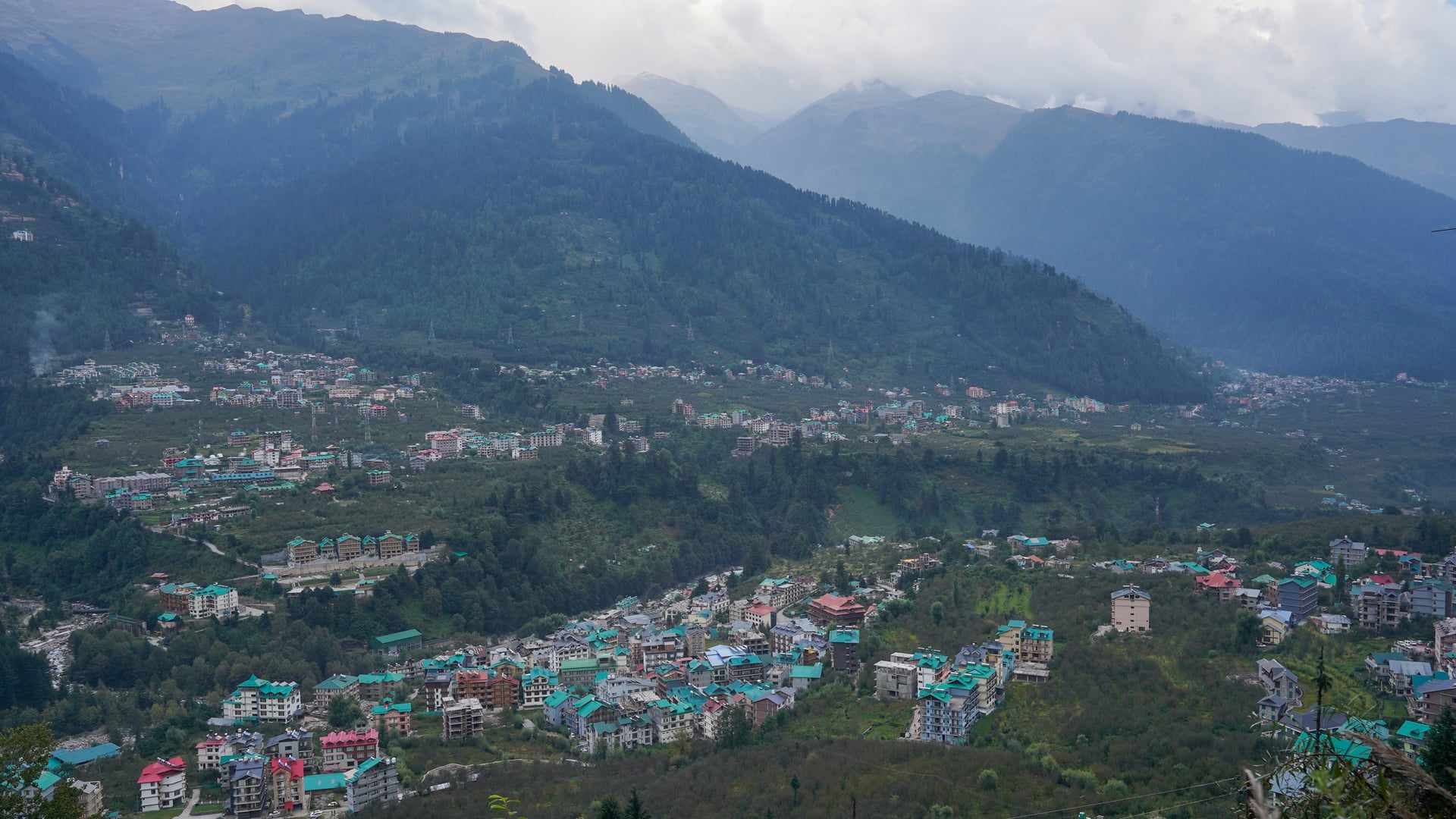
What Makes a Good Location for a Hospitality Business in Himachal Pradesh?
A location strategy framework for Himachal Pradesh hospitality: evaluating micro-market catchments, the final kilometre accessibility factor, invisible utility infrastructure, and multi-season demand resilience across 311+ lakh visitor arrivals.
By Guzlands Editorial
Choosing a location for a hospitality business in Himachal Pradesh is fundamentally different from choosing a conventional commercial property. A hotel, homestay, café, restaurant, resort, retreat or farm-based hospitality business depends on a combination of tourism demand, road access, seasonality, views, local infrastructure, property economics and the reason a guest is willing to travel to that particular place. Himachal Pradesh recorded 144.96 lakh conventional tourist arrivals in 2025, including approximately 144.11 lakh domestic visitors and 0.85 lakh foreign visitors. The state also recorded 166.51 lakh pilgrim visits, bringing the combined number of tourist and pilgrim visits to more than 311 lakh. Tourism, hotels and restaurants represented approximately 7.77% of the state's GSVA in FY2024–25. These figures demonstrate the scale of the market, but they do not tell an investor where the next successful hospitality business should be located. Himachal is not one hospitality market. Shimla, Manali, Dharamshala, Kasauli, Bir, Tirthan, Kullu, Dalhousie and smaller mountain destinations attract different customer segments, have different access conditions and support different types of hospitality. A hotel that works in Manali may be inappropriate for a quieter valley. A café that depends on local repeat customers needs a different site from a destination restaurant. A homestay can often operate successfully without high street visibility, while a restaurant may require strong access and parking. The commercial value of a mountain property is therefore determined less by how famous the destination is and more by the relationship between customer demand, property characteristics, accessibility and operating economics. For an investor, the correct question is not “Which is the best place in Himachal?” It is “Which location gives this particular hospitality business the strongest chance of generating sustainable demand at a sustainable property cost?”
Himachal Pradesh Is a Collection of Micro-Markets
The first mistake investors make is treating the state as one market. It is not. Himachal Pradesh has a highly fragmented geography, and each tourism cluster has a different economic profile. A city-oriented property in Shimla can depend partly on established leisure, institutional and business demand, while a resort near Manali can be driven heavily by leisure travel and seasonal peaks. Dharamshala and surrounding areas have different religious, wellness, cultural and international visitor characteristics. Bir has developed a reputation around paragliding and outdoor travel. Tirthan has a more nature-led positioning. Kasauli benefits from relative proximity to the Chandigarh and NCR markets and can attract short-break travellers. Smaller destinations may have less established hotel supply but also less proven demand. This means the number of tourists visiting Himachal cannot be directly translated into demand for a specific property. An investor needs to identify the destination's primary demand generators and understand which of them are relevant to the proposed business. A 25-room hotel may need a substantial annual flow of visitors to achieve acceptable occupancy. A six-room homestay can potentially work with a much smaller customer base if its average room rate is high and operating costs are controlled. A restaurant may depend on a combination of local residents, hotel guests and destination visitors. An agrihood or retreat may intentionally locate outside a major town and rely on the property itself to create demand. The implication is that destination selection must happen alongside business-model selection. The right property in the wrong market can be difficult to operate, while a less obvious property in the right micro-market can become highly successful. Investors should therefore compare locations based on actual customer behaviour rather than tourism reputation.
A Famous Destination Is Not Necessarily the Best Location
High-profile destinations create visibility, but they also create competition and higher property costs. Investors often assume that purchasing in a recognised tourism centre is automatically safer because demand already exists. The opposite can happen when the market has a large quantity of existing accommodation and the new property lacks differentiation. If a destination already has hundreds or thousands of rooms across hotels, homestays, villas and serviced properties, a new operator needs a clear reason for customers to select the new asset. That reason could be better service, stronger design, better views, a specific experience, a superior restaurant or a more attractive price, but it needs to exist. Property cost also needs to be considered. If two locations have similar guest demand but one requires twice the capital to acquire a site, the cheaper location may provide the better investment return. This is particularly relevant in mountain markets because the reputation of a destination can push up both land and building values. A property that makes sense at ₹1.5 crore may not make sense at ₹3 crore, even if the underlying business opportunity has not changed. Investors should therefore compare revenue potential against total property basis, not simply compare destinations according to popularity. It is entirely possible for a property in a less famous location to offer stronger economics because the acquisition cost is lower and the business can create a compelling reason to visit. In hospitality, the destination's reputation is only one source of demand. The property itself can become another. This becomes especially valuable for boutique stays, retreats, destination restaurants and experiential hospitality businesses where the customer is not simply buying proximity to an attraction. They are buying the experience of being at the property.
Access Often Matters More Than the View
Mountain properties are frequently marketed around panoramic views, which is understandable because scenery is one of the strongest reasons people travel to Himachal. But a view does not compensate indefinitely for difficult access. The property may be only 15 kilometres from a major destination and still take an hour to reach depending on road conditions, traffic, terrain and the final approach. For a two-night leisure stay, guests may accept some inconvenience, but the property has to provide enough value to make the journey worthwhile. A premium retreat can convert difficult access into exclusivity. A budget hotel generally cannot. A family with young children may be more sensitive to a difficult road than a couple seeking privacy. Corporate groups may prioritise access and parking over isolation. Access is therefore a customer-segment issue rather than a simple geographical measure. It should also be evaluated from an operating perspective. Hotels require food deliveries, linen movement, maintenance visits, staff transport, waste removal and other logistical support. A remote site can increase these costs significantly. Suppose a restaurant property saves ₹1.5 lakh annually in rent by moving farther from a main road but adds ₹3 lakh in transport, staffing and marketing costs. The lower rent has actually made the business more expensive. Similar calculations apply to accommodation. If a remote property requires staff accommodation, regular vehicle support and larger supplies of maintenance inventory, those costs need to be reflected in the feasibility model. Investors should therefore assess journey time, road quality, vehicle access, parking, public transport where available, winter conditions and supply logistics before valuing a mountain property. The best location is not always the closest location. It is the location where the level of accessibility matches the value of the hospitality experience being sold.
The Final Kilometre Can Determine Guest Behaviour
Mountain hospitality businesses can be affected disproportionately by the final stretch of road between a main route and the property. A property may have an excellent highway connection but a narrow, steep or poorly maintained approach that makes arrival uncomfortable. This affects first impressions, vehicle suitability, check-in time and repeat demand. For certain hospitality formats, this can be a material commercial disadvantage. A family hotel needs easy arrivals. A large wedding venue needs bus and vehicle access. A restaurant requires customers to feel comfortable bringing their cars. A boutique retreat can tolerate a difficult approach if transport is professionally managed and the experience justifies it. Investors should therefore physically travel the route before purchasing a property. Maps and listing photographs do not communicate road quality adequately. The route should be assessed during the periods when the property is likely to receive demand. If a business is designed around winter travel, winter access matters. If it depends on monsoon travel, drainage and road resilience matter. If most customers arrive by private vehicle, turning radius, parking and vehicle movement need to be assessed. A site that requires visitors to park far away and walk uphill may be manageable for some segments and unacceptable for others. The same applies to deliveries. A kitchen that receives ingredients once a day needs a very different logistics model from a property receiving regular fresh produce, bakery supplies and housekeeping inventory. These practical details rarely receive attention during the early property-search phase, but they become operating realities after acquisition. In mountain hospitality, the final kilometre is not simply a transport issue. It is part of the product, the customer experience and the cost structure.
The View Has Economic Value Only When the Guest Pays for It
Views can create pricing power, but only when they are distinctive and accessible from the guest experience. A property may advertise a “mountain view” that is visible only from one balcony, while another property might have uninterrupted views from bedrooms, common spaces and outdoor areas. These are not equivalent products. The value of a view should therefore be evaluated through the guest experience rather than through marketing language. A premium room facing the valley may command a higher rate than an internal room, while a destination restaurant with a remarkable sunset position can potentially support higher customer spend. This is where design and property selection intersect. Window orientation, room placement, terraces, outdoor spaces and landscaping can determine whether the natural setting becomes a real commercial advantage. Investors should also consider whether the view is protected. A property that currently has a clear valley view may lose it if neighbouring construction changes the skyline. Land-use patterns and surrounding development therefore matter. The most defensible views are often those linked to topography or protected land rather than simply undeveloped neighbouring parcels. Views also influence marketing efficiency. A property with a genuinely distinctive visual proposition can receive stronger organic discovery through photography and social media, reducing some customer-acquisition costs. That does not mean every property needs an Instagram-worthy landscape. It means the visual characteristics of the site should be considered part of the commercial proposition. When a guest is willing to pay a premium because of the setting, the view becomes part of the revenue model. When it has no measurable influence on booking behaviour or rate, it is simply a pleasant physical characteristic. Investors should therefore ask whether the property can actually convert its natural setting into pricing power.
Road Connectivity Determines the Catchment
A hospitality business in Himachal depends partly on how far its customers are prepared to travel. This makes road connectivity a major determinant of its catchment. A property within an easy drive of a large urban population can potentially benefit from weekend demand even without being in a major tourist centre. A property several hours farther away may need a stronger destination proposition and longer average stay to compensate for the additional travel. This is particularly important for short-break travel. If the total journey becomes too long for a two-night stay, potential customers may choose an easier destination. The same property may become much more viable for three- or four-night stays if the experience is compelling enough. Investors should therefore consider travel time from major customer source markets such as Delhi, Chandigarh, Punjab and other nearby urban centres, rather than looking only at the property's distance from a tourist attraction. The road network can also change. Improvements in highways or tunnels can reduce travel time and expand the practical catchment of a destination. Conversely, road instability or recurring closures can affect demand. A property should be evaluated across normal and adverse conditions. An easily accessible property is often more resilient because it can attract a broader group of customers and operate with lower logistical friction. More remote properties can work exceptionally well, but they need stronger differentiation. This distinction is important when comparing property prices. A site that is 30 minutes more accessible may command a premium because it can attract customers who would not consider a remote site. But the premium should still be justified by the additional revenue or lower operating cost it generates. Connectivity is therefore a commercial variable, not just a convenience feature.
Parking Can Limit the Revenue of an Otherwise Good Property
Parking is an often-overlooked constraint in mountain hospitality. A property may have enough land and rooms to support a 20-room hotel but insufficient practical parking to accommodate the resulting guest volume. This can become even more challenging when the property includes a restaurant, events, staff housing or multiple guest buildings. In some destinations, guests arrive predominantly by private vehicle, making parking a major factor in the booking decision. Hotels that cannot guarantee convenient parking can lose customers to properties that offer it. Restaurants face an even more direct relationship because customers may decide whether to visit based on how easy it is to arrive and leave. Parking also creates additional capital requirements. Constructing parking on sloped land may involve retaining structures, drainage and access roads. These costs can materially change the development budget. Suppose a property appears to require ₹2 crore of investment but needs another ₹20 lakh for site access and parking. The effective project cost has increased by 10% before the business begins operating. Investors should therefore inspect not just the number of parking spaces but how vehicles actually move through the site. Can two cars pass? Can luggage be unloaded without blocking the road? Can taxis turn around? Can a larger vehicle deliver supplies? Can emergency services access the building? These questions are particularly relevant for wedding venues and larger resorts, where vehicle movements can be substantial. A property with limited parking may still work for a walkable boutique stay or small retreat, but the business model needs to reflect that limitation. Parking should be considered part of the site's hospitality capacity.
Water, Power and Heating Can Make a Cheap Property Expensive
The economics of mountain properties are often determined by infrastructure that guests never see. Water, power, heating, wastewater and waste management can represent significant capital and operating costs. A property with unreliable water may require storage tanks, pumps and additional source development. A hotel with weak electrical capacity may need an upgrade or backup generation. Heating systems need to operate reliably during cold periods. Wastewater systems may be more complex in locations without municipal infrastructure. These costs are particularly important in remote properties because replacement and maintenance can be harder and more expensive. Suppose two properties cost ₹1.2 crore each. Property A has reliable water, power and heating infrastructure. Property B requires ₹25 lakh of upgrades to make those systems suitable for hospitality. The second property is effectively a ₹1.45 crore project before any interior work. If the property also requires staff accommodation or road improvement, the gap grows further. Investors should therefore obtain a technical assessment before determining whether a site is genuinely inexpensive. Infrastructure also affects future expansion. A hotel with spare water and power capacity can potentially add rooms. A property already operating near capacity may have limited development potential even if additional land is available. This means infrastructure should be evaluated not just as a cost but as an asset. Strong systems can increase the long-term flexibility and resilience of a hospitality property. Weak systems can become a recurring operational burden. In a mountain market, the invisible infrastructure beneath the guest experience can have a larger effect on investment returns than the visible interiors above it.
Seasonality Should Influence Location Choice
Himachal's tourism market remains seasonal, and the location a business chooses can determine how severe that seasonality is. A property dependent on a narrow summer period will have a very different cash-flow profile from one that can attract customers during summer, autumn, winter and shoulder seasons. The state government has explicitly identified diversification beyond the summer period as a tourism objective. () For an investor, this means the strongest location may be one with several independent demand drivers. Snow can generate winter demand in one market. Trekking and outdoor activities can extend the season in another. Wellness, spiritual travel, corporate retreats, weddings and food can create additional demand elsewhere. A property should therefore be mapped against the annual calendar rather than its busiest month. Suppose a hotel achieves 75% occupancy during a three-month peak but only 25% during the remaining nine months. Its annual occupancy would be approximately 37.5%. Another hotel that maintains 55% during the peak and 40% during the rest of the year would achieve approximately 43.8% annual occupancy, despite having a lower peak. The second property may generate more stable cash flow and require less discounting. This is why annual occupancy is much more useful than peak occupancy when evaluating property economics. Investors should understand what happens when the weather is less favourable, school holidays end and tourist traffic decreases. A location with a diverse customer base may offer greater resilience even if its peak performance is less spectacular. For smaller homestays and boutique properties, this can be especially important because fixed staffing and property costs are difficult to absorb during prolonged low-demand periods.
A Good Location Can Support More Than One Revenue Stream
One way to improve location economics is to choose a property capable of supporting multiple hospitality uses. A six-room stay with a good restaurant can monetise both guests and outside customers. A property with a large garden can support weddings and private events. A farm can combine agriculture, accommodation and food. A retreat can add wellness programming. A destination café can become a stopping point for visitors travelling through a region. These opportunities can be valuable because the property does not have to rely on room revenue alone. However, the surrounding location still needs to support the additional activity. A restaurant serving outside customers needs sufficient destination pull or local demand. An event venue needs accessibility and parking. A farm-based hospitality concept needs sufficient space and agricultural viability. A wellness property needs an environment compatible with the experience. This means investors should consider the location according to the full commercial ecosystem rather than the primary use. A property near a tourist road may have value because of passing visitors, accommodation demand and event potential simultaneously. An inland estate may be more attractive because it can operate as accommodation, destination dining and an agricultural experience. This broader view can increase the number of properties worth considering. A conventional hotel search may overlook a large house or farm because it is not currently operated as hospitality. A hospitality real estate search can identify the same property based on what it could become. The location is therefore evaluated according to potential uses rather than current classification.
Property Prices Need to Be Compared With Revenue Density
The most important location question for an investor is not whether a property is expensive or inexpensive. It is whether the price is justified by the revenue the property can generate. Consider two six-room properties. The first costs ₹1.2 crore and is expected to generate ₹75 lakh of annual room revenue. The second costs ₹2 crore and is expected to generate ₹1.1 crore. Both may appear attractive, but the first has a stronger relationship between revenue and acquisition cost. Now suppose the second property has additional land and the ability to add four more rooms. If those rooms can be legally developed and generate another ₹50 lakh in annual revenue, its future economics become more compelling. This illustrates why property valuation needs to consider current and future capacity. A property's location can justify a premium when it creates measurable additional revenue or reduces operating risk. A famous address that produces no additional commercial advantage is simply an expensive address. Investors should therefore calculate revenue per key, revenue per square foot where appropriate, and total project cost relative to expected operating contribution. The analysis should also include the cost of transforming the property into the required product. A ₹1 crore property requiring ₹60 lakh of conversion has a ₹1.6 crore effective project basis before other costs. A ₹1.2 crore property requiring only ₹20 lakh of work has a ₹1.4 crore basis. The second may offer the better investment even if its initial asking price is higher. In hospitality real estate, property selection is ultimately about capital efficiency. Location matters because it influences revenue, but the investor still needs to compare that revenue with the total cost of controlling the site.
What Makes a Good Location for a Homestay in Himachal?
A good homestay location is usually one that provides a strong combination of accessibility, natural setting, privacy, local character and proximity to enough activities to keep the guest experience interesting. Unlike a retail business, a homestay does not need significant footfall. Guests are booking intentionally, often based on photography, reviews and online discovery. This allows operators to look slightly beyond conventional commercial centres and potentially acquire better property at a lower basis. A quiet village within reasonable driving distance of an established destination can sometimes offer better economics than a property directly inside the busiest tourist zone. But accessibility still matters. Guests need to find the property easily and arrive without excessive effort. Parking and luggage access are also important. The property itself becomes more important because the guest will spend a significant amount of time there. Views, outdoor space, architecture, fireplaces, common areas, food and the relationship with the surrounding landscape can create reasons to choose one homestay over another. The six-room regulatory ceiling under Himachal's current home-stay framework also means the economics of the property need to be considered carefully. The state has defined home-stay accommodation standards and documentation requirements, and registration involves inspection and prescribed fees. () A large house with extensive land may therefore be attractive because it offers privacy and future potential, but it should be evaluated against what can legally and commercially be operated. A good homestay site gives the guest a strong reason to stay at the property rather than simply a reason to visit the town.
What Makes a Good Location for a Restaurant or Café?
Restaurants and cafés are more dependent on the surrounding catchment than homestays. A café may require repeat local customers because average spend is relatively low. A restaurant may depend on a combination of tourists, local residents, hotel guests and destination visitors. The site therefore needs to be tested against the expected sales volume. Suppose a café expects 100 customers per day at an average realised spend of ₹500. At 360 operating days, annual gross sales would be approximately ₹1.8 crore. If the property costs ₹2 lakh per month in rent, annual occupancy cost is ₹24 lakh or 13.3% of sales. A second location costing ₹1 lakh per month but attracting only 55 customers per day would generate approximately ₹99 lakh annually. Its occupancy cost would be 12.1%, which looks slightly better, but the total revenue and absolute contribution could be far lower. The stronger property depends on the full cost structure. This is why restaurant and café locations should be evaluated through customer volume, spend, table turns and rent together. Visibility can be valuable, but it comes at a price. A destination restaurant can operate with lower footfall if its food and setting create sufficient motivation to travel. A premium café may choose a property with a strong visual identity and outdoor space over one with maximum pedestrian traffic. In Himachal, roadside and highway locations can also create opportunities for food businesses serving travellers, but the access and safety of vehicles becoming customers are essential. The best site is therefore not always the busiest. It is the site whose traffic profile aligns with the economics of the concept.
What Makes a Good Location for an Agrihood or Retreat?
Agrihoods, farm stays and retreats require a fundamentally different location strategy because the land itself becomes part of the product. The property needs enough space to support the intended experience, whether that involves agriculture, gardens, wellness, outdoor dining, workshops or other activities. It also needs sufficient water and access. Being too close to urban development can reduce the sense of escape, while being too remote can make customer acquisition difficult. The ideal site often sits within a realistic travel time of an established city or tourism corridor while providing a sufficiently distinctive environment once the guest arrives. This creates a useful model for emerging hospitality locations: the destination does not have to have a huge hotel market if the property itself can become the reason for travel. A farm-based retreat could draw guests for its food, landscape and programming rather than its proximity to a famous attraction. But the economics need to account for land maintenance, agriculture, water, staffing and the fact that a large site creates higher fixed costs. Suppose a 15-acre property generates ₹80 lakh in annual hospitality revenue but requires ₹35 lakh of staffing, maintenance, utilities and agricultural operating expenses. The remaining contribution may be attractive or unattractive depending on acquisition cost. The land can also have value outside hospitality, but that should not be used to disguise a weak operating model. Investors should therefore separate the agricultural economics, hospitality economics and land value. A good location creates an environment in which all three can reinforce one another. A poor one creates a large property that is expensive to maintain without generating sufficient revenue.
The Location Should Fit the Guest's Reason for Travelling
Every hospitality business begins with a reason for travel. A guest may want snow, nature, food, wellness, adventure, solitude, culture, spirituality, a weekend escape or simply a comfortable place to sleep while visiting somewhere else. The property's location needs to support that reason. If the business is selling adventure, proximity to activities matters. If it is selling privacy, surrounding density matters. If it is selling food, the journey to the property needs to feel worthwhile. If it is selling wellness, noise and environmental quality become important. This sounds obvious, but many properties are positioned without a clear understanding of the customer motivation. An investor might purchase a beautiful site because it has a valley view, then discover that the target market mainly wants easy access to restaurants and attractions. Another might build an expensive wellness retreat in an area where the surrounding environment is noisy and commercially developed. The strongest locations are those where the physical environment naturally supports the customer proposition. This reduces the amount of work the business has to do to convince people. The property itself becomes evidence of the brand promise. A mountain retreat in a quiet forest setting does not need to explain why it is quiet. A farm-based stay does not need to manufacture an agricultural story. A destination restaurant with an exceptional landscape can use that environment as part of the dining experience. In commercial terms, a strong location can reduce the amount of money required to create differentiation because the destination already provides some of the value.
A Location Scorecard Can Prevent an Expensive Mistake
Before acquiring a hospitality property, investors should score it systematically rather than relying on instinct. A practical scorecard could evaluate destination demand, access, parking, infrastructure, competition, seasonality, property character, customer fit, acquisition cost and expansion potential. Each factor can then be weighted according to the proposed business. For a boutique hotel, property character and demand may be highly weighted. For a café, visibility and local catchment may be more important. For a resort, land, access, infrastructure and destination appeal may carry greater weight. Suppose one property scores 9/10 for views but 4/10 for access, 5/10 for infrastructure and 6/10 for acquisition economics. Another scores 7/10 for views, 8/10 for access, 9/10 for infrastructure and 8/10 for acquisition economics. The first may be more visually impressive, but the second could be a much stronger business. The scorecard is not designed to produce a scientifically perfect answer. Its purpose is to make the assumptions visible and comparable. It also helps investors avoid overvaluing a single characteristic. A spectacular view should not compensate for a property that is impossible to operate. A famous destination should not compensate for a price that produces a weak return. A low purchase price should not compensate for insufficient demand. Good hospitality locations tend to score reasonably well across multiple dimensions. They are not dependent on one exceptional feature.
What Should You Check Before Buying a Hospitality Property in Himachal?
Before acquiring any hospitality property, an investor should establish five things: who the customer is, how the customer reaches the property, what the customer is willing to pay, what it costs to operate the site and what the property can legally support. The first requires market and competitive analysis. The second requires an actual assessment of access and travel time. The third requires realistic ADR or average-spend assumptions based on comparable properties. The fourth requires an operating model covering staff, heating, utilities, maintenance, food, distribution and other expenses. The fifth requires legal and technical due diligence. Himachal's tourism registration procedures already demonstrate the importance of property documentation. For home stays, the state requires documents including revenue records such as Jamabandi and Tatima, and the department reviews the building and rooms as part of the process. () Larger projects can involve further approvals relating to land use, building plans, local authorities and other permissions. An investor should therefore never assume that a property can be used for the intended hospitality model simply because a broker describes it that way. The property needs to be legally, technically and commercially feasible. This is particularly important when considering older buildings, agricultural land, forest-adjacent properties or sites with complicated access rights. The cost of solving a legal or infrastructure issue after acquisition can be much higher than the cost of discovering it before the purchase. Due diligence is therefore part of property selection, not a formality that follows it.
There Is No Single Best Location in Himachal Pradesh
The best hospitality location in Himachal depends on the business being built. A homestay does not need the same location as a restaurant. A boutique hotel does not need the same location as an agrihood. A destination restaurant can sometimes operate successfully where there is almost no pedestrian traffic because its property creates the reason for the visit. A café may require regular local customers. A resort may need substantial land and a destination strong enough to support longer stays. The state's tourism market is large enough to support many models, but competition is already significant, with thousands of registered hotel and homestay properties operating across its districts. () That means the investment question should move beyond destination popularity. The strongest opportunities are often created when a particular property solves a particular customer need better than competing properties while maintaining a sensible capital basis. A less famous destination with lower real estate costs, better access and a differentiated product can potentially produce stronger returns than an expensive property in a famous tourism centre. Likewise, a premium property may justify its location premium when it can demonstrate stronger pricing power, occupancy or ancillary revenue. The decision ultimately comes down to the relationship between place, property, customer and economics.
Find the right property for your next venture.
Explore Properties