
Top 10 Locations in the World to Open a Restaurant
A strategic view of ten global restaurant markets — from Dubai and Singapore to New York, Tokyo, and Lima — where culinary ambition, demand, capital, tourism, and culture converge to create serious opportunity.
Guzlands Editorial
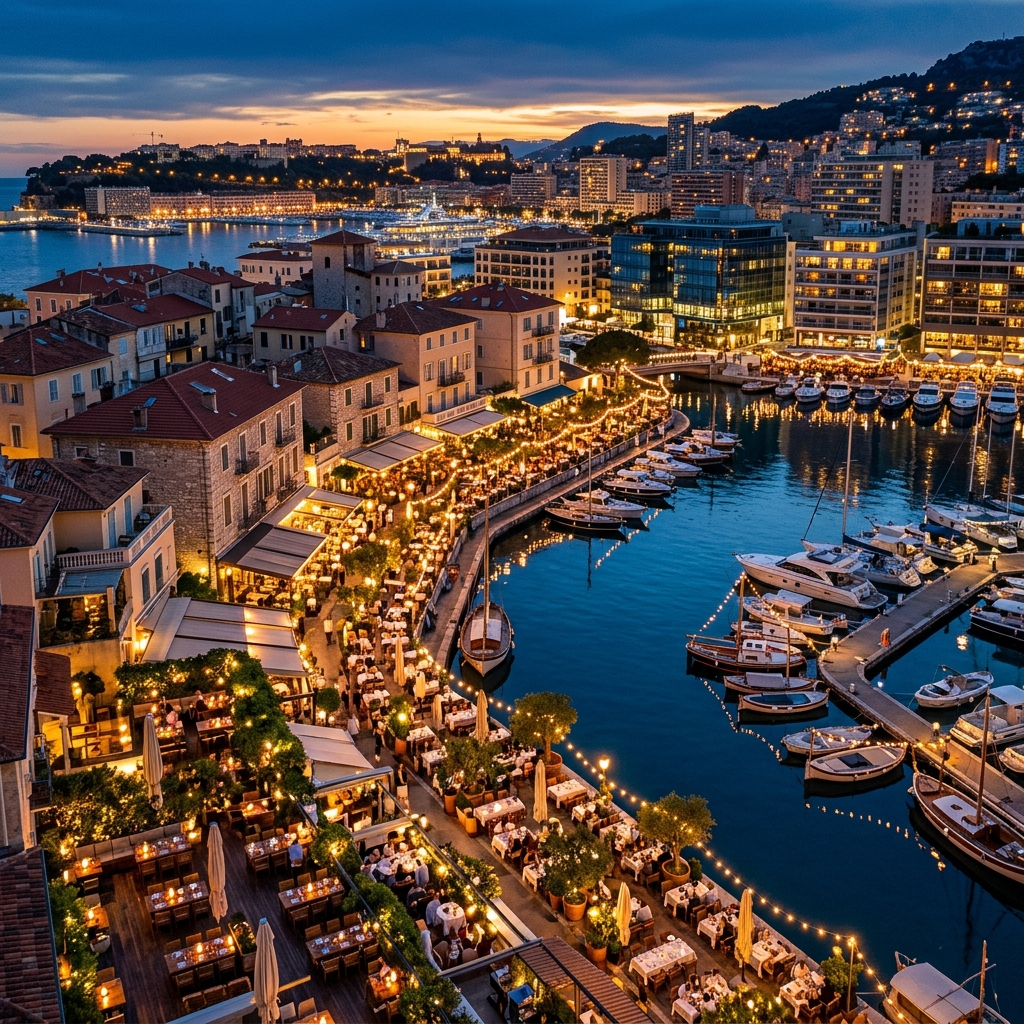
Where culinary ambition, demand, capital, tourism, and culture meet.
Opening a restaurant is never just about food. A restaurant lives or dies at the intersection of concept, location, rent, labor, supply, pricing power, customer behavior, competition, regulation, and daily execution. A great chef in the wrong market can struggle. A modest concept in the right location can become a durable institution.
A restaurant is not only a creative project. It is a real estate decision, an operating system, and a demand thesis.
The best city to open a restaurant depends on the concept. A fine dining restaurant needs different conditions from a neighborhood café. A delivery-first brand needs different economics from a destination restaurant.
A chef-led tasting menu needs a different audience from a high-volume casual dining format. A restaurant built for tourists is not the same as one built for locals.
So a serious ranking cannot simply ask: where is food popular? Food is popular everywhere.
The better question is: “Where do dining culture, customer spending, tourism, global visibility, talent, supply chains, and real estate opportunity combine strongly enough to support a serious restaurant business?”
This list is not a guarantee of success. It is a strategic view of ten global restaurant markets that offer meaningful opportunity for the right operator, with the right concept, the right site, and enough capital discipline.
The criteria
A strong restaurant city usually has five advantages.
1. Demand — Residents, workers, tourists, business travelers, students, or affluent diners who eat out frequently enough to support the model.
2. Culinary culture — Customers who care about food, understand value, and are willing to try new concepts.
3. Visibility — Media, tourism, hotel demand, social sharing, global rankings, and international attention that can help a strong restaurant become known beyond its neighborhood.
4. Talent and supply — Chefs, service staff, vendors, producers, importers, designers, and hospitality professionals who make serious execution possible.
5. Real estate viability — Not necessarily cheap rent, but a realistic route to finding a site where revenue potential can justify occupancy cost.
1. Dubai, United Arab Emirates
Dubai is one of the most attractive restaurant markets in the world for ambitious operators — and also one of the least forgiving.
The city offers a rare combination: international residents, high tourism volumes, luxury hotels, global brands, strong mall and mixed-use development, and a consumer base comfortable with eating out. Dubai is not just a place where restaurants serve demand. Restaurants help define the city’s identity.
For premium, experiential, Indian, Japanese, Middle Eastern, Mediterranean, steakhouse, nightlife-led, beach club, café, and hotel-linked concepts, Dubai can be exceptionally powerful. The city understands spectacle, hospitality, service, design, and social dining.
The risk is saturation. Dubai attracts operators from everywhere. Rents can be high, fit-outs can be expensive, and customers are exposed to global standards. A weak concept dressed in expensive interiors will not be enough.
Dubai rewards sharp positioning, strong design, disciplined service, high-quality marketing, and serious capital backing.
Best for: Premium casual, luxury dining, chef-led Indian, Japanese, Mediterranean, hotel restaurants, nightlife, beach clubs, destination cafés, experiential dining.
Avoid if the model depends on low rent, slow organic discovery, or founder improvisation.
2. Singapore
Singapore is one of the world’s most disciplined restaurant markets. It is compact, affluent, safe, globally connected, and deeply food-oriented. Its dining culture spans hawker centres, Michelin-starred restaurants, luxury hotels, corporate dining, regional Asian cuisines, modern cafés, and high-end tasting menus.
For a restaurant operator, Singapore offers clarity. Customers are knowledgeable. Standards are high.
International cuisines are understood. Business travel, finance, tourism, and regional connectivity create steady demand.
A restaurant that performs well in Singapore earns credibility because the market is demanding.
The challenge is cost. Labor, rent, compliance, and competition can be severe. Singapore is not an easy market for vague concepts or poorly costed menus. Operators need precision: menu engineering, site discipline, efficient staffing, and a clear reason to exist.
Best for: Asian modern dining, premium casual, chef-led restaurants, cafés, business dining, high-quality fast casual, fine dining, regional expansion pilots.
Avoid if the business model needs cheap labor, loose compliance, or high tolerance for operational mistakes.
3. New York City, United States
New York remains one of the most important restaurant cities in the world. It has density, wealth, tourism, media, culture, ambition, and an unmatched appetite for new dining. The city supports almost every kind of restaurant: fine dining, neighborhood bistros, immigrant cuisines, bakeries, delis, cocktail bars, cafés, luxury hotel restaurants, quick-service formats, and chef-driven independent concepts.
New York is powerful because it creates cultural visibility. A restaurant that succeeds there can influence global dining language. It can attract press, investors, chefs, brand collaborations, and international attention.
The city is especially strong for concepts with a clear point of view, strong food, sharp design, and serious operating discipline.
But New York is brutal. Rent, payroll, insurance, licensing, buildout, competition, and customer expectations are all high. The city can make a restaurant famous, but it can also expose weak economics quickly. A full-service restaurant without a strong beverage program, tight labor model, and clear neighborhood strategy can get punished.
Best for: Chef-led restaurants, high-concept casual, immigrant cuisine at premium quality, bakeries, wine bars, cocktail-led dining, destination restaurants, neighborhood institutions.
Avoid if the concept is undercapitalized, operationally loose, or dependent on novelty alone.
4. London, United Kingdom
London is one of the deepest and most global dining markets in Europe. It has international wealth, tourism, finance, media, strong neighborhood dining, luxury hotels, private clubs, food halls, pubs, bakeries, immigrant cuisines, and a sophisticated customer base.
London’s advantage is range. It supports everything from high-end Mayfair dining to neighborhood restaurants in Soho, Shoreditch, Hackney, Notting Hill, Marylebone, Borough, and beyond.
It is particularly strong for Indian, Middle Eastern, European, Japanese, modern British, bakery, café, wine bar, and chef-led casual concepts.
London’s challenges are real: high rents, labor pressure, energy costs, complex staffing, and a cautious consumer environment in some segments. It is not enough to be stylish. The restaurant must know whether it is serving tourists, office workers, affluent locals, destination diners, or neighborhood regulars.
Best for: Premium casual, modern Indian, modern British, bakery-café formats, wine bars, chef-led neighborhood restaurants, luxury hotel dining.
Avoid if the concept has weak cost control or no clear customer occasion.
5. Tokyo, Japan
Tokyo is one of the world’s most serious restaurant cities by culinary depth. Its food culture is extraordinary not because of one segment, but because of consistency across levels: ramen counters, sushi bars, yakitori shops, kaiseki, tempura, cafés, bakeries, French restaurants, Italian dining, izakayas, hotel dining, and tiny neighborhood specialists.
Tokyo rewards mastery, repetition, detail, and discipline.
For chefs and operators, Tokyo offers a demanding but prestigious environment. Customers understand quality. Food culture is embedded in daily life.
The market respects specialization. A restaurant can be small, focused, and still deeply respected if execution is excellent.
The challenge is cultural and operational complexity. Foreign operators need local knowledge, language capability, regulatory understanding, supplier access, and a concept that respects Japanese dining expectations.
Tokyo is not the place for careless global branding. It is a place for precision.
Best for: Specialist concepts, chef-led counters, bakeries, cafés, high-end dining, refined casual formats, Japanese-adjacent international cuisine.
Avoid if the model depends on loud branding, weak execution, or superficial international positioning.
6. Bangkok, Thailand
Bangkok is one of the strongest restaurant opportunities in Asia. It combines deep local food culture, tourism, affordability relative to many global capitals, nightlife, hotels, malls, delivery adoption, and international culinary attention.
It is a city where street food, regional Thai cuisine, fine dining, cafés, cocktail bars, and global concepts coexist.
Bangkok’s advantage is energy. People eat out. Tourists come for food.
Local diners are adventurous. The cost base can be more forgiving than Singapore, Tokyo, New York, or London, though prime locations and premium fit-outs still require discipline.
The risk is competition and price sensitivity. Bangkok has incredible food at many price points. A foreign or premium concept must justify its pricing clearly. Mediocre food in a good-looking room will not survive long.
Best for: Thai regional concepts, modern Asian dining, cafés, cocktail-led restaurants, hotel dining, experiential restaurants, affordable premium casual.
Avoid if the concept cannot compete with strong local food culture or lacks a clear value proposition.
7. Paris, France
Paris remains one of the world’s defining restaurant cities. It has tourism, culinary heritage, affluent residents, global prestige, luxury hospitality, strong bakeries, cafés, bistros, wine culture, fine dining, and an audience that takes food seriously.
Paris is not just a restaurant market. It is a global reference point for how dining, design, service, and urban culture interact.
Paris is strongest for concepts that understand restraint, quality, provenance, wine, pastry, design, and atmosphere. It can support fine dining, modern bistros, bakeries, cafés, wine bars, and internationally influenced restaurants when the execution is serious.
The challenge is tradition and regulation. Paris can be difficult for outsiders. Labor, permitting, leases, neighborhood expectations, and customer sophistication require care.
The market does not need another generic premium restaurant. It needs point of view, quality, and discipline.
Best for: Modern bistros, fine dining, pastry, wine bars, luxury hotel restaurants, French-regional concepts, restrained global cuisine.
Avoid if the concept is overdesigned, undercooked, or culturally tone-deaf.
8. Mexico City, Mexico
Mexico City has become one of the most compelling restaurant markets in the world. It has scale, culture, tourism, design, strong local cuisine, international attention, and a growing audience for modern restaurants that reinterpret tradition without losing substance.
The city’s advantage is culinary depth. Mexican cuisine has global recognition, but Mexico City gives it urban range: street food, markets, cantinas, taco culture, bakeries, cocktail bars, tasting menus, contemporary Mexican, Japanese-Mexican, seafood, and neighborhood dining.
For the right operator, Mexico City offers a powerful combination of local identity and global curiosity.
The risk is uneven economics. Strong neighborhoods can become expensive, while other areas require local intelligence. Operators need to understand safety, staffing, supply, lease structures, and customer segmentation carefully. A restaurant that is globally appealing but locally irrelevant will struggle.
Best for: Modern Mexican, chef-led casual, bars, bakeries, cafés, destination dining, design-led neighborhood restaurants.
Avoid if the concept treats Mexico City as an aesthetic rather than a serious culinary culture.
9. Madrid, Spain
Madrid is one of Europe’s most attractive restaurant cities for operators who want a major capital with strong dining habits, tourism, nightlife, and a less saturated feel than Paris or London in certain segments.
The city has a powerful food rhythm: late dining, tapas, bars, markets, casual restaurants, high-end gastronomy, hotel dining, and strong social eating culture.
Madrid is not only a tourist market. It is a resident-driven dining city, which matters for repeat business.
The opportunity in Madrid is not only fine dining. It is also in well-priced premium casual, modern Spanish, Latin American, Japanese, bakery-café, wine-led formats, and concepts serving both locals and visitors.
Compared with some global capitals, Madrid can offer a more balanced relationship between lifestyle, demand, and operating opportunity, though prime locations remain competitive.
The challenge is differentiation. Madrid already has strong native dining culture. A new restaurant must understand local behavior, meal timing, beverage habits, and neighborhood dynamics.
Best for: Spanish modern casual, tapas evolution, wine bars, Latin American dining, Japanese-Spanish concepts, bakery-café formats, chef-led restaurants.
Avoid if the concept ignores local dining rhythm or relies only on tourist traffic.
10. Lima, Peru
Lima is one of the most important culinary cities in Latin America. Its strength comes from a rare combination: native ingredients, coastal seafood, Andean and Amazonian influence, Japanese-Peruvian Nikkei cuisine, Chinese-Peruvian Chifa traditions, strong chef culture, and global recognition.
Lima has become a city where food is not just consumed. It is part of national identity and international positioning.
For the right operator, Lima is attractive because it offers culinary credibility, ingredient depth, and international curiosity. It can be a powerful market for chef-led concepts, Peruvian modern dining, Nikkei, seafood, destination restaurants, and restaurants attached to travel, culture, and design.
The challenge is scale and spending power relative to global capitals. Lima may not offer the same pricing ceiling as Dubai, New York, London, Paris, or Singapore for every format. Operators need a very clear model: local repeat business, destination dining, tourism, or exportable culinary brand-building.
Best for: Peruvian modern dining, Nikkei, seafood, chef-led restaurants, culinary tourism, destination dining.
Avoid if the model requires very high global-city pricing without a clear international draw.
Honorable mentions
Several cities narrowly miss the top ten but deserve serious attention depending on the concept.
Hong Kong — Still important for premium dining, finance, luxury hospitality, and cross-border demand, though the market requires careful reading.
Copenhagen — Highly influential for food innovation, sustainability, and chef-led concepts, but smaller and more specialized.
Seoul — Strong cultural momentum, especially for Korean cuisine, cafés, bakeries, beauty-led lifestyle hospitality, and design-driven casual concepts.
Mumbai and Delhi NCR — Highly relevant for India-focused operators because of scale, young consumers, delivery culture, malls, hotels, and premium dining growth. Site selection, licensing, rent, and consistency remain decisive.
Los Angeles — Compelling for wellness, casual premium, global cuisines, entertainment, and lifestyle-led dining, though labor and real estate costs are serious.
The real answer: choose the city after choosing the concept
The wrong way to use this list is to pick a glamorous city and then invent a restaurant for it. The right way is the reverse.
Start with the concept. Define the customer, price point, cuisine, format, service model, capital requirement, operating complexity, and desired brand position. Then choose the city and neighborhood that make the model more likely to work.
A fine dining Indian restaurant may make more strategic sense in Dubai, London, New York, or Singapore than in a market where the audience is not ready to pay for it. A high-volume casual Asian concept may be stronger in Bangkok, Singapore, or London than in Paris. A modern bakery-café may perform well in London, Tokyo, Seoul, Singapore, or Madrid, depending on rent and customer routine. A destination culinary restaurant may be credible in Lima, Mexico City, Bangkok, Tokyo, or Copenhagen if the chef and supply chain are exceptional.
“The city matters. But the micro-location matters more. A restaurant does not open in ‘New York.’ It opens on a specific street, under a specific lease, near specific competitors, serving specific customers at specific times of day.”
A great city cannot rescue a bad site. A famous dining market cannot fix weak unit economics. A high-income customer base cannot save poor execution.
Final view
The top ten restaurant locations in the world are not simply the most fashionable food cities. They are markets where demand, culture, visibility, and commercial opportunity converge.
Dubai offers global ambition and premium demand. Singapore offers discipline and regional credibility. New York offers density and cultural influence.
London offers range and international sophistication. Tokyo offers culinary seriousness. Bangkok offers tourism and food energy.
Paris offers heritage and prestige. Mexico City offers cultural depth and global momentum. Madrid offers strong dining rhythm and European opportunity.
Lima offers culinary identity and destination power.
But every one of these markets can punish a weak operator.
“The best place to open a restaurant is not where the city is exciting. It is where the concept, customer, site, economics, team, and timing align. That is the real location strategy.”