
The Rise of Experiential Travel
Why the future of hospitality is being shaped by meaning, place, and memory — exploring how experiential travel is redefining the relationship between guests, properties, and destinations.
Guzlands Editorial
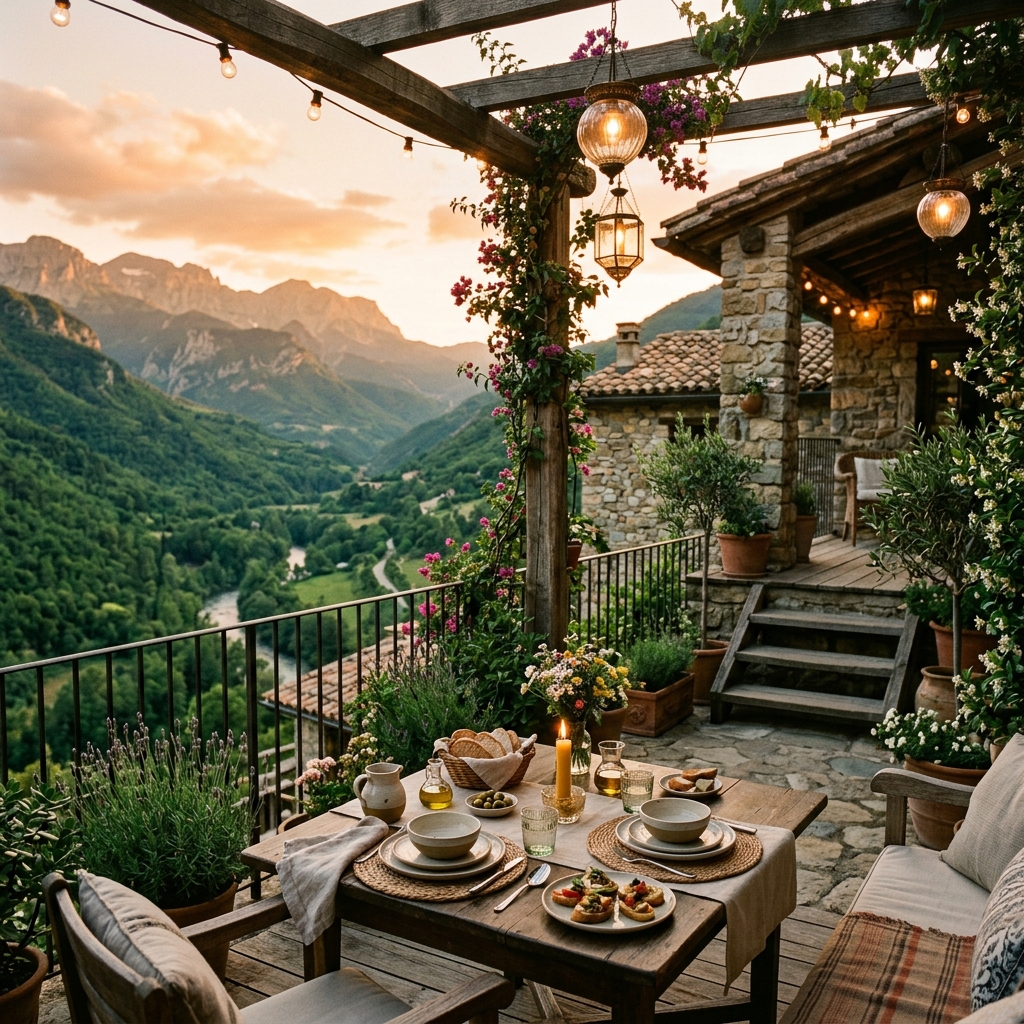
Travel has always been more than movement.
People travel to see, to rest, to escape, to learn, to celebrate, to recover, to reconnect, to be changed, or simply to step outside the patterns of ordinary life. But for much of the modern travel industry, the experience was often organized around access and efficiency: flights, rooms, destinations, itineraries, amenities, and price points.
That era has not disappeared. Convenience still matters. Comfort still matters.
Service still matters. Value still matters.
But the center of gravity is shifting.
Travelers are increasingly looking beyond the mechanics of travel and toward the meaning of it. They are not only asking where to go, but why it matters. They are not only booking accommodation, but seeking atmosphere, identity, and connection. They are not only consuming destinations, but looking for a more personal relationship with place.
“This is the rise of experiential travel. It is not a trend in the shallow sense. It reflects a larger shift in how people value time, memory, identity, and place.”
It is not simply a preference for boutique hotels, curated tours, local food, wellness retreats, or adventure itineraries. Those are expressions of something deeper. Experiential travel reflects a larger shift in how people value time, memory, identity, and place.
In a world where much of life has become digital, accelerated, standardized, and transactional, travel offers something increasingly rare: embodied experience. The chance to be somewhere, not just view it. To participate, not just observe. To feel a destination through its food, people, rhythm, architecture, landscape, craft, silence, and culture.
Hospitality sits at the center of this shift.
The question for the industry is no longer only how to host the traveler. It is how to create the conditions for an experience worth remembering.
From destination to experience
Traditional travel was often destination-led. People chose a city, beach, monument, country, or resort, and the hospitality industry provided the necessary infrastructure around that choice. Hotels offered accommodation.
Restaurants offered meals. Operators offered transport and tours. The destination itself carried much of the meaning.
Experiential travel changes that hierarchy.
The destination still matters, but it is no longer enough by itself. Travelers increasingly want to understand how a place feels, what it represents, how it lives, and how they can participate in it with some degree of authenticity. The hotel is not merely where they sleep.
The restaurant is not merely where they eat. The guide is not merely a source of information. The property is not merely an asset.
Each becomes part of the experience.
A small inn can become the reason for travel. A remote retreat can define the journey more than the region around it. A restaurant can shape a traveler’s understanding of a city. A vineyard, farm, forest lodge, heritage home, coastal villa, wellness property, or culinary destination can become the primary motivation for movement.
This shift has significant implications. It means hospitality businesses are no longer judged only by function. They are judged by feeling, coherence, originality, and connection to place.
It means real estate is no longer just a container for service. It becomes part of the proposition. It means design is not merely visual.
It becomes narrative. It means food is not merely consumption. It becomes culture.
It means staff are not merely operational. They become interpreters of place.
The industry has always known this intuitively. What has changed is that travelers are now making decisions around it more consciously.
“They are not just buying rooms. They are buying time in a particular emotional environment.”
The search for meaning in a saturated world
The rise of experiential travel cannot be understood only through tourism. It must be understood through the broader condition of modern life.
People live in a world of abundance and fatigue. There is abundant content, but less attention. Abundant choice, but less certainty.
Abundant connectivity, but often less depth. Many consumer experiences have become optimized, algorithmic, and predictable. The result is convenience, but also sameness.
Travel offers a counterweight.
It allows people to step into specificity. A certain street at dusk. A meal cooked from regional ingredients.
A restored building with memory in its walls. A conversation with a local host. A landscape that cannot be compressed into a feed.
A rhythm of life different from one’s own.
Experiential travel grows from this hunger for specificity. Travelers are seeking the opposite of generic consumption. They want experiences that feel grounded.
They want to sense that a place could not exist in exactly the same form anywhere else. They want the feeling of discovery, even when the journey has been planned through digital platforms and global networks.
This does not mean every traveler wants hardship, remoteness, or extreme novelty. Experiential travel is not the rejection of comfort. In many cases, it is the elevation of comfort through context.
A beautiful room becomes more powerful when it belongs to its setting. A meal becomes more memorable when it reveals a region. A wellness stay becomes more credible when it is rooted in landscape, climate, silence, and care.
A luxury property becomes more meaningful when it offers not only refinement, but perspective.
The new traveler is not necessarily anti-luxury. The new traveler is increasingly anti-generic.
That distinction matters.
Authenticity, carefully understood
Few words in travel are used as often, or as loosely, as authenticity.
Travelers say they want authentic experiences. Brands promise authentic journeys. Destinations market authentic culture.
But authenticity is difficult. It can quickly become performance. It can be packaged so aggressively that it loses credibility.
It can place unreasonable expectations on local communities. It can turn culture into décor.
The rise of experiential travel requires a more disciplined understanding of authenticity.
Authenticity does not mean untouched. Most places are shaped by exchange, migration, commerce, tourism, adaptation, and reinvention. Culture is not static.
Hospitality itself is a form of presentation. A hotel, restaurant, or retreat is always designed to some degree.
The question is not whether an experience is completely unmediated. The question is whether it is honest.
Does it respect the place it draws from? Does it avoid reducing culture to costume? Does it create value locally?
Does it understand the difference between interpretation and exploitation? Does it offer depth rather than cliché? Does it allow the guest to encounter something real, without pretending that hospitality is not also a curated environment?
The most compelling experiential hospitality does not simply display local identity. It participates in it responsibly. That may be through architecture that responds to climate and materials.
Food that supports regional producers. Service that reflects local rhythms without losing professionalism. Programming that introduces guests to crafts, landscapes, histories, and communities with care.
Properties that are not copied and pasted from elsewhere, but shaped by their environment.
Authenticity is not a marketing claim. It is a discipline.
The role of food in experiential travel
Food has become one of the most important gateways into place.
A traveler may forget a hotel corridor, a transfer, or a standard itinerary. They are less likely to forget a meal that made a destination intelligible. Food carries agriculture, climate, memory, migration, religion, trade, class, family, technique, and ritual. It reveals how people live.
This is why culinary travel has become central to experiential travel. Restaurants, markets, farms, bakeries, street food, vineyards, distilleries, cooking schools, tasting rooms, and chef-led concepts are no longer peripheral to travel. They often define it. A destination’s food culture can influence where travelers go, how long they stay, what they spend, and what they remember.
Hospitality businesses that understand this have an advantage. A hotel restaurant is no longer merely an amenity. It can become a cultural anchor.
A breakfast is not merely a service moment. It can introduce the region. A bar is not merely a revenue center.
It can become a social stage. A farm visit is not merely an activity. It can connect the guest to land, labor, and seasonality.
“Food turns travel into participation. It invites the traveler to taste a place rather than simply observe it.”
It creates intimacy quickly. It can make unfamiliar surroundings feel accessible. It can also create economic links between hospitality businesses and local producers, artisans, fishermen, farmers, and communities.
But here too, seriousness matters. Experiential food travel should not reduce local cuisine to a checklist. It should not flatten complex traditions into decorative content.
The strongest culinary hospitality respects both excellence and origin. It understands that a dish is not only a product, but a carrier of context.
In experiential travel, food is not a supporting act. It is often the main language.
The property as part of the experience
Real estate plays a profound role in experiential travel.
The building, site, landscape, and spatial design are not neutral. They influence how guests feel, move, sleep, gather, dine, and remember. A property can create anticipation before arrival.
It can slow people down. It can frame a view. It can make privacy feel natural.
It can connect interior life to landscape. It can hold history. It can create rituals.
In experiential hospitality, the property is part of the story.
This has implications for how hospitality assets are valued, developed, repositioned, and operated. The most meaningful opportunities are not always the largest or most obvious. Sometimes value sits in a restored heritage building, a small coastal site, a mountain property, a working farm, a former industrial structure, a village home, an old inn, or a simple space in a culturally rich neighborhood.
The question becomes not merely what the property is, but what it can make possible. Can it support a distinctive guest experience? Does it have a relationship with its surroundings?
Does it allow for operational excellence? Can it carry a brand without being overdesigned? Does it offer enough specificity to stand apart?
Can it be maintained responsibly? Does it serve both the guest and the economics?
Experiential travel rewards properties with character, but character alone is not enough. A beautiful place still needs access, infrastructure, safety, service capability, regulatory clarity, and financial discipline. A remote destination may inspire guests, but punish operations.
A heritage asset may be emotionally powerful, but costly to maintain. A small property may offer intimacy, but limited revenue flexibility.
The best experiential hospitality balances poetry with operating reality. That balance is difficult. It is also where lasting value is created.
The shift from passive consumption to participation
One of the defining features of experiential travel is the move from passive consumption to participation.
The traveler does not want only to be served. They want to be involved, even lightly. They want to learn something, taste something, make something, walk somewhere, meet someone, understand a process, or feel closer to the life of the place.
This participation may take many forms. A cooking session with a regional chef. A guided walk through a historic district.
A harvest experience at a farm. A design tour of a restored property. A meditation practice shaped by landscape.
A craft workshop. A market visit. A conservation activity.
A conversation with a local expert. A slow meal built around seasonal ingredients. A stay that encourages silence and reflection rather than constant activity.
The common thread is not spectacle. It is involvement.
This creates an important challenge for hospitality brands. Participation cannot feel forced. Guests do not want to be over-programmed.
They do not want every moment turned into content. The strongest experiences leave room for discovery, privacy, and interpretation.
Experiential travel is not about filling every hour. It is about making time feel more meaningful.
The art is in curation without suffocation. Hospitality must provide structure, but not control. It must offer access, but not intrusion.
It must create moments, but not manufacture emotion too aggressively. The best experiences often feel inevitable in retrospect. They appear simple, but they are the result of careful thought.
Luxury is being redefined
Experiential travel is changing the meaning of luxury.
For decades, luxury hospitality was often associated with formality, opulence, exclusivity, and visible abundance. These still have their place in certain markets. But a broader shift is underway. For many travelers, luxury is becoming less about excess and more about access, privacy, originality, time, space, attention, and emotional resonance.
A quiet property in a remarkable landscape can feel more luxurious than a grand but generic hotel. A deeply personal dining experience can feel more valuable than a formal room with expensive finishes. A stay that restores energy can feel more important than one that merely signals status. A place that cannot be easily replicated can command more loyalty than one that simply meets a standard.
The new luxury is not always louder. Often, it is more precise.
It understands what to remove. It respects silence. It values proportion.
It offers thoughtful service without theatricality. It gives the guest a sense that every element belongs: the architecture, the food, the materials, the view, the scent, the staff, the pacing, the rituals, the relationship to the destination.
This does not mean luxury becomes casual or careless. On the contrary, experiential luxury requires extraordinary discipline. When the experience is understated, every detail matters more.
Poor operations cannot hide behind decoration. Weak service cannot hide behind concept. Inauthentic storytelling cannot hide behind design.
The traveler may not articulate every failure, but they will feel incoherence.
The future of luxury hospitality will belong to those who can create experiences that are emotionally rich, operationally rigorous, and deeply connected to place.
Technology’s quiet role
Experiential travel may appear to be a reaction against digital life, but technology remains deeply involved.
Travelers discover places online. They compare options through platforms. They read reviews, study images, watch videos, save recommendations, follow creators, and build itineraries through digital ecosystems. Technology influences where people go long before they arrive.
The opportunity is not to make travel less human through technology. The opportunity is to make the human parts easier to find, understand, and access.
Technology should reduce friction, not dominate the experience. It should help travelers discover relevant places, understand context, communicate clearly, and move through the journey with confidence. But once the experience begins, technology should often recede.
The most sophisticated hospitality experiences are not necessarily the most visibly technological. They use technology to support clarity, personalization, efficiency, and trust, while preserving the emotional and physical quality of the stay. The guest should feel taken care of, not processed.
In experiential travel, digital infrastructure is strongest when it enables presence rather than distracts from it.
This is especially important as travelers become more sensitive to over-automation. Hospitality cannot become a sequence of screens. The industry’s enduring advantage is human care, spatial atmosphere, and sensory experience. Technology should strengthen those advantages, not replace them.
Sustainability and responsibility
Experiential travel also raises questions of responsibility.
When travelers seek deeper access to places, communities, and ecosystems, the industry must consider the consequences. Popularity can strain fragile destinations. Cultural experiences can become extractive.
Environmental pressure can increase. Local housing markets can be affected. Communities can be turned into backdrops for outside consumption.
The rise of experiential travel must therefore be linked to a more responsible model of hospitality.
This does not mean every experience must present itself as a sustainability project. But it does mean that serious operators, investors, owners, and developers need to think beyond immediate demand. They must consider how hospitality interacts with local economies, culture, ecology, labor, and long-term destination health.
A place that is overused loses the qualities that made it valuable. A community that does not benefit from tourism may eventually resist it. A landscape treated only as a commercial asset may degrade.
Responsible experiential travel requires restraint. It requires a willingness to grow thoughtfully. It requires better relationships with local suppliers and communities.
It requires sensitivity to scale. It requires design that responds to climate and context. It requires operational decisions that respect the place, not only the guest.
The future of travel will not be defined only by where people want to go. It will also be defined by where they are still welcome, and where hospitality can operate without damaging the very qualities travelers came to experience.
Implications for hospitality businesses
The rise of experiential travel creates both opportunity and pressure.
The opportunity is clear. Businesses that can offer meaningful, distinctive, place-led experiences can command stronger loyalty, deeper emotional connection, and clearer differentiation. They can move beyond commodity competition. They can become reasons to travel, not merely places to stay or eat.
But the pressure is equally real. Experiential travel raises expectations. It demands coherence.
A brand cannot simply add local language, curated activities, or design references and call itself experiential. The guest will sense whether the experience has depth or whether it has been assembled for appearance.
Hospitality businesses must therefore ask harder questions. What is the relationship between the property and its place? What does the experience reveal that could not be found elsewhere?
How does the food reflect the region, the concept, and the guest? How does service carry warmth without becoming scripted? What should be designed, and what should be left alone?
What local partnerships are meaningful rather than decorative? What level of scale protects the experience? What operational model can support the promise?
These questions are strategic, not cosmetic.
Experiential travel is not an interior design style. It is not a marketing campaign. It is not a package of activities. It is a way of thinking about value.
The risk of overproduction
As experiential travel becomes more desirable, it also risks becoming overproduced.
The market already shows signs of repetition: similar visual languages, similar retreat formats, similar “local” experiences, similar boutique aesthetics, similar promises of transformation. What begins as authenticity can become formula. What begins as intimacy can become a content strategy. What begins as place-led hospitality can become another standardized product with handmade textures.
This is the paradox. The more the industry tries to manufacture uniqueness, the more everything can start to look the same.
Avoiding that requires restraint and honesty. Not every property needs to be a transformative experience. Not every meal needs a story.
Not every stay needs to promise self-discovery. Not every destination should be turned into a lifestyle narrative. Sometimes the most powerful hospitality is simple, well-run, generous, and deeply appropriate to its context.
The best experiential travel does not shout. It does not over-explain itself. It allows the guest to discover meaning rather than consume it pre-packaged. It trusts atmosphere, craft, place, and service to do their work.
In a market crowded with claims, understatement may become a competitive advantage.
The long-term direction of travel
The rise of experiential travel reflects a durable change in expectations.
Travelers will continue to need convenience, safety, value, and comfort. Those fundamentals will not disappear. But the strongest hospitality concepts will increasingly be judged by their ability to offer something more: a sense of place, a point of view, a relationship to culture, a memory that survives the transaction.
This will shape investment, development, design, operations, branding, and real estate decisions.
Properties with distinctive character may attract renewed interest. Adaptive reuse may become more compelling where it can preserve history while creating contemporary relevance. Culinary-led destinations may become stronger anchors of travel demand.
Smaller, more personal hospitality formats may compete effectively against larger standardized assets. Destinations outside traditional centers may benefit if they can offer depth, access, and responsible growth.
But success will not come from chasing the language of experience. It will come from building the substance behind it.
The next phase of hospitality will reward those who understand that experience is not an add-on. It is the outcome of many disciplined choices: the right place, the right concept, the right scale, the right service culture, the right design, the right food, the right partnerships, and the right relationship with the destination.
Hospitality has always been about making people feel something. Experiential travel simply makes that truth harder to ignore.
A more human future for travel
The rise of experiential travel is ultimately a return to something ancient.
People have always traveled for stories, meals, landscapes, rituals, trade, pilgrimage, rest, celebration, and encounter. What is changing is the modern traveler’s awareness of those motivations, and the industry’s need to respond with greater intelligence.
The future of travel will not be defined only by more destinations, more rooms, more itineraries, or more convenience. It will be defined by better experiences.
More thoughtful places. More meaningful encounters. More responsible relationships with local culture and landscape.
More disciplined hospitality. More properties that understand their role not just as assets, but as settings for memory.
This is a demanding future. It asks more of owners, operators, designers, investors, chefs, hoteliers, brokers, developers, and destinations. It asks them to think beyond transaction and toward significance.
It asks them to respect both the guest and the place. It asks them to build hospitality that is commercially sound, emotionally intelligent, and culturally aware.
That is the promise of experiential travel.
“Not travel as consumption. Travel as contact. Contact with place.
Contact with people. Contact with culture. Contact with oneself.
Contact with a version of time that feels less hurried and more alive.”
In a world increasingly defined by speed and sameness, that may be one of hospitality’s greatest responsibilities: to create places where people can still feel present.
And that is why experiential travel is not merely rising. It is reshaping what hospitality is for.