The Economics of Owning a Boutique Hotel in a Small Town
An institutional underwriting framework for small-town and Tier II/III boutique hotels: evaluating lower capital entry bases, high ADR vs. volume trade-offs, weekday demand diversification, and multi-business property platforms.
By Guzlands Editorial
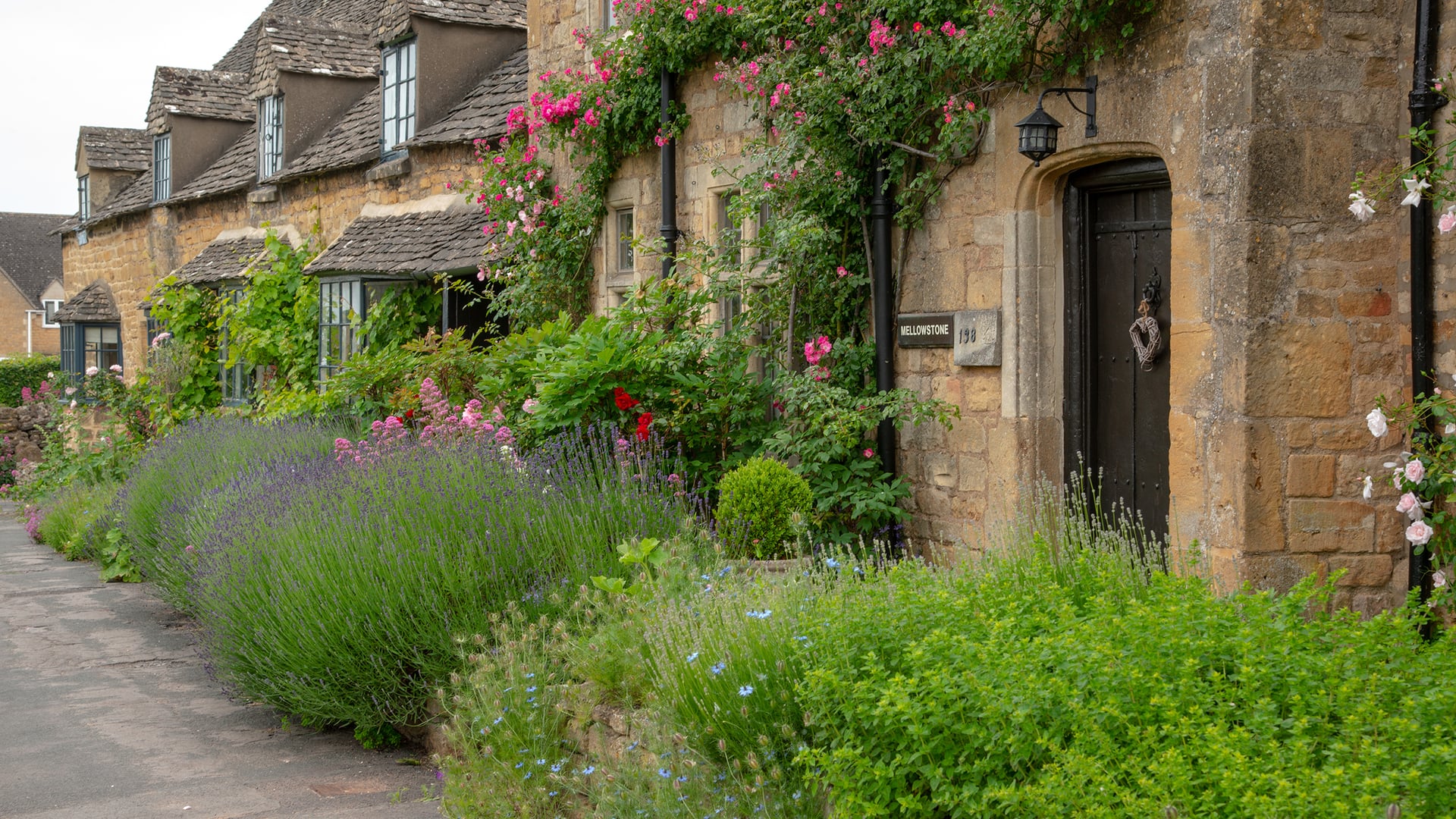
Boutique hotels are often associated with major cities, famous tourism destinations and affluent urban neighbourhoods, but some of the most interesting hospitality opportunities can exist in smaller towns. The economics, however, are very different from those of a conventional city hotel. A small-town boutique hotel does not necessarily have the volume of business travel, corporate demand or constant footfall that supports large urban properties. Instead, it has to build its economics around a more specific combination of destination appeal, local identity, limited quality supply, weekend travel, events, food and beverage, and the ability of the property itself to become part of the reason for visiting. This creates both opportunity and risk. Land and property can be substantially less expensive than in major cities, while the cost of building a distinctive hospitality product can also be lower. At the same time, revenue potential can be constrained if the destination has limited demand or strong seasonality. The investment case therefore depends heavily on the relationship between the property and the destination. A small-town boutique hotel should not be treated as a smaller version of a city hotel. It is a different business model in which real estate, destination identity and hospitality proposition are closely connected. This distinction is becoming more relevant as tourism expands beyond traditional gateway cities and as travellers increasingly seek smaller destinations, regional experiences and properties with stronger connections to place. Industry investment data in India, for example, has shown growing hotel activity in Tier II and Tier III markets, with JLL reporting that these markets represented approximately 40% of hotel transaction volume in 2025. () Similar dynamics can be seen internationally as independent and boutique operators look beyond saturated primary markets. The opportunity for investors is therefore not simply to find a cheaper location. It is to identify a smaller market where the property can achieve enough rate, occupancy and ancillary revenue to create attractive economics without requiring the scale of a conventional hotel.
Small-Town Hospitality Begins With the Destination, Not the Building
The first thing an investor needs to understand is whether the town itself generates enough reasons for people to visit. Small-town hospitality works best when there is a clear demand driver, whether that is heritage, nature, food, wine, agriculture, wellness, outdoor recreation, pilgrimage, culture, events, business activity or proximity to a larger urban centre. A town does not need to attract millions of visitors to support a boutique hotel. It needs a sufficiently defined customer base whose willingness to stay overnight can be translated into room nights. This is where many small-town projects go wrong. An investor sees inexpensive real estate, a beautiful building and a pleasant environment and assumes that hospitality demand will follow. It may not. The property can be commercially attractive as real estate and still lack a viable customer base. A more disciplined process begins by identifying the reason people are already travelling to the town or are likely to travel there. If a town attracts 100,000 annual visitors, that does not mean a new hotel can capture a meaningful share of them. Some visitors may be day-trippers. Others may stay with relatives. Some may be price-sensitive. Others may prefer established resorts outside town. The addressable market needs to be defined much more narrowly. Suppose a destination receives 200,000 visitors a year, of whom 35% stay overnight. That creates 70,000 potential overnight visitors. If the relevant target segment represents 20% of that market, the realistic customer pool is approximately 14,000 people. The hotel then needs to understand how much of that pool it can reasonably capture. These calculations are simplified, but they illustrate the importance of moving from destination-level tourism statistics to property-level demand. The hotel is not competing for everyone. It is competing for a specific customer segment within a specific destination.
The Real Estate Advantage Can Be Significant
The main attraction of a small-town boutique hotel is often the real estate basis. A property that would be prohibitively expensive in a major metropolitan area may be available at a much lower cost in a smaller market. This can create room for the investor to spend more on the guest experience without pushing the total project cost beyond what the business can support. Imagine two properties, both capable of becoming 20-room boutique hotels. Property A in a major city requires ₹15 crore for acquisition and ₹5 crore for conversion. Property B in a smaller town requires ₹4 crore for acquisition and ₹4 crore for conversion. Property B has a total project cost of ₹8 crore compared with ₹20 crore for Property A. If the urban hotel can generate ₹4 crore of annual operating contribution and the small-town property generates ₹2.2 crore, the city hotel produces more absolute profit but the small-town property may offer the stronger return on capital. This is one of the central arguments for small-town hospitality investment. Lower real estate cost can create a more favourable relationship between capital and cash flow. The challenge is ensuring that the lower acquisition basis does not simply reflect lower demand. Cheap land is not valuable if the hotel cannot generate enough revenue. Investors should therefore calculate total project cost relative to achievable annual operating profit and not assume that lower land prices automatically produce better returns. The ideal property combines a low or reasonable acquisition basis with enough destination demand to support premium rates. In some cases, an existing building can be particularly attractive because the investor acquires both real estate and character. A former mansion, railway building, factory, courthouse, farmhouse or traditional house may provide a differentiated platform that would be difficult to reproduce through new construction. The value lies in the combination of property economics and destination relevance.
Boutique Hotels Trade Volume for Rate
One reason small-town boutique hotels can work with fewer rooms is that they do not necessarily need to compete through volume. A 15- or 20-room property can produce attractive economics when it achieves a higher average daily rate than the broader market and maintains disciplined operating costs. This requires a clear proposition. The property might be design-led, food-led, wellness-oriented, heritage-focused or strongly connected to the surrounding landscape. The objective is to create something that customers actively choose rather than simply accept because few alternatives exist.
Consider a 20-room boutique hotel operating at 50% occupancy with an average realised room rate of ₹10,000. The property has 7,300 available room nights and sells approximately 3,650 nights, generating ₹3.65 crore in annual room revenue. At 60% occupancy, room revenue rises to approximately ₹4.38 crore. Now consider a lower-priced hotel charging ₹6,500 at 65% occupancy. It generates approximately ₹3.08 crore. The boutique property has lower occupancy but materially higher room revenue. Its operational complexity may also be lower because it has fewer guests and less physical inventory. However, higher ADR usually requires greater investment in design, service, food, maintenance and branding. The rate cannot simply be declared; customers need to perceive a reason for paying it. This is where the physical property becomes strategically important. A distinctive heritage structure, exceptional view, strong architecture or destination restaurant can provide the basis for premium pricing. In a small town, differentiation can be particularly valuable because the hotel may become one of the few properties in its segment. The investor should nevertheless benchmark against comparable destinations rather than assuming local scarcity will support any price. Customers are still comparing the hotel with alternatives available through online channels, including larger resorts and short-term rentals. Premium pricing is therefore a function of perceived value, not simply limited supply.
The Hotel Needs More Than Weekend Demand
Weekend travel can be an important part of the small-town hotel model, especially when the destination is within driving distance of a major city. But a business that depends entirely on Friday and Saturday nights may struggle to absorb its fixed costs. The property needs additional demand during weekdays or shoulder periods wherever possible. This is where the hotel's wider commercial proposition becomes important. Corporate retreats, weddings, private events, workations, wellness programmes, food experiences and local dining can all create additional utilisation. The appropriate mix depends on the destination. A town near a major city may have strong weekday corporate demand. A heritage town may attract cultural travellers. A mountain destination may support wellness and outdoor travel. A wine region can develop around food, agriculture and events. A pilgrimage destination may have demand patterns that differ entirely from leisure travel.
Suppose a 20-room boutique hotel has 7,300 available room nights but only achieves 40% annual occupancy from leisure travellers. It sells 2,920 room nights. At ₹9,000 ADR, that produces approximately ₹2.63 crore of room revenue. If the operator can add 400 room nights through retreats, weddings and corporate groups, annual occupancy rises to approximately 45.5%, and room revenue increases to roughly ₹2.97 crore, assuming the same average rate. The additional 400 room nights generate nearly ₹36 lakh in room revenue before considering associated F&B and event income. This demonstrates why demand diversification can have a significant effect on small properties. The hotel does not necessarily need to become busier every day. It needs to identify additional occasions that fill otherwise underutilised inventory. The strongest concepts often use the property's existing characteristics to access these segments. A historic property may host intimate weddings. A countryside hotel may run retreats. A culinary property may host workshops. A hotel near a business centre can support off-sites during weekdays. This broader demand strategy can make a small-town hotel materially more resilient.
Food and Beverage Can Be the Second Engine
A boutique hotel in a small town often has an opportunity that a standard hotel may not: it can become one of the destination's strongest restaurants. If the local dining ecosystem is underdeveloped, a well-designed restaurant can attract residents and visitors independently of hotel occupancy. This is particularly useful because room inventory is finite. A six-room hotel can only sell six rooms per night, but its restaurant can serve dozens or hundreds of customers.
Suppose a 20-room boutique hotel operates a 60-seat restaurant. If the restaurant serves an average of 70 customers per day at an average realised spend of ₹1,200, annual gross sales over 360 operating days could reach approximately ₹3.02 crore. That is a substantial business relative to the hotel. It will also have its own food cost, payroll, rent allocation, utilities, marketing and equipment requirements, so revenue cannot be treated as profit. But the restaurant can materially improve the total economics of the property when it attracts local customers.
The strategic benefit is broader than revenue. A recognised restaurant can create awareness for the hotel. Local customers may discover the property first through food and later consider it for accommodation or events. Visitors staying elsewhere may come to the restaurant and become future hotel customers. The restaurant can also provide a reason for the hotel to operate outside peak room occupancy periods.
This is why restaurant selection matters in small-town boutique hotel development. The operator should not think of F&B as a compulsory breakfast room. It can become a destination business. In certain properties, the restaurant may be one of the primary reasons the real estate works at all.
The Property Can Become the Marketing
One advantage small-town boutique hotels have over generic accommodation is that the property itself can become a marketing channel. A memorable building, landscape or design can drive discovery through photography, social media, travel media and word of mouth. This is particularly useful when traditional advertising would be expensive relative to the size of the market.
Consider two hotels with similar room rates. One is a generic 20-room building with standard rooms and a functional lobby. The other is a restored historic property with distinctive architecture, gardens and a destination restaurant. The second property has more opportunities to communicate a clear visual identity. It can become recognisable before a customer ever books a room.
This has economic value because strong differentiation can reduce dependence on price-based acquisition. A customer searching for “hotels in [town]” may compare several properties, but a customer searching specifically for a distinctive experience may be predisposed toward the hotel that owns that category in their mind.
The physical property therefore becomes part of brand strategy.
This also explains why existing buildings can be attractive acquisition opportunities. Character is difficult and expensive to manufacture. A new building can be beautifully designed, but an old property may already possess proportions, materials, landscaping and history that create a stronger sense of identity.
The challenge is preservation. Over-renovating an old property can remove the characteristics that make it commercially distinctive. Under-investing can produce an uncomfortable guest experience. The strongest adaptive-reuse projects balance historical character with modern operational requirements. For investors, the objective is to retain the elements that create willingness to pay while upgrading the systems guests expect.
The Hotel Can Become Part of the Destination
In a major city, the destination already exists. The hotel competes within it.
In a smaller town, the hotel may have a greater role in shaping the destination experience itself. A strong property can provide one of the reasons people decide to visit or stay longer. This is particularly true for boutique hotels with restaurants, experiences, architecture or distinctive landscapes.
The relationship can become circular.
The hotel attracts visitors.
Visitors create demand for restaurants and other businesses.
New businesses improve the destination.
The stronger destination supports the hotel.
The hotel becomes a piece of the local tourism infrastructure.
This is where the investment case becomes more interesting. The investor is not only buying into existing demand. They may be contributing to destination formation. That creates more risk because the surrounding ecosystem may take years to develop, but it can also create substantial upside.
The key is to determine whether the hotel can survive before the destination reaches maturity.
A property that requires a fully developed tourism market from day one is risky.
A property that can operate with existing demand while benefiting from future destination growth is much more attractive.
Investors should therefore look for assets where current demand supports a viable base business and future destination development creates additional upside rather than being essential to the original investment thesis.
Small Town Does Not Mean Small Market
Another important distinction is between population size and economic catchment. A town may have only 30,000 residents and still support a significant hospitality business because its customer base extends far beyond local residents. Tourists, second-home owners, visitors from nearby cities, corporate groups, wedding parties and day visitors can all contribute.
This is particularly relevant for destinations within two to four hours of large urban centres. The local population may be small, but the surrounding metropolitan catchment can be substantial.
Imagine a small town located three hours from a city with five million residents. If only 0.5% of that city's population takes one leisure trip to the destination over a year, that represents 25,000 potential visitors from one source market. The calculation is illustrative, but it shows why geographic catchment can matter more than municipal population.
A hotel can therefore serve multiple markets simultaneously.
The local market supports the restaurant.
The regional market supports weekend accommodation.
The metropolitan market supports short-break travel.
Destination visitors provide additional demand.
Corporate and events demand fill selected periods.
The investment case becomes stronger when several of these segments are accessible without requiring completely different infrastructure.
This is also why road connectivity can be a more important variable than the size of the town. A destination that is easy to reach from a large population centre can have far greater commercial potential than a more remote town with better scenery but limited accessibility.
Seasonality Still Needs to Be Underwritten
Small-town hotels often have stronger seasonality than major urban properties, and this can materially affect profitability. A property may have a very strong summer, winter or festival season and weak demand for the rest of the year. This makes cash-flow management important.
Suppose a 20-room hotel generates 70% occupancy during four peak months, 50% during four shoulder months and 25% during four weak months. The annual occupancy is approximately 48.3%. An investor who underwrites the project to the 70% peak figure will therefore dramatically overestimate annual revenue.
The hotel needs to be able to survive the low periods.
This does not necessarily mean maintaining the same room price. Dynamic pricing can be used to capture strong demand during peaks while stimulating demand during weaker periods. But discounting should not become the entire strategy. The hotel should also identify alternative customer segments.
Longer stays can help.
Retreats can help.
Events can help.
Local dining can help.
Workations can help.
Corporate programmes can help.
The objective is to develop a revenue calendar rather than a single seasonal business.
This is where small properties can have an advantage. A boutique hotel can be repositioned relatively quickly around different demand occasions because its operating structure is less complex. A restaurant can host a seasonal programme. A retreat can occupy the property for several days. An event can create multiple room nights at once.
The property becomes a flexible hospitality platform.
Operating Costs Are Often Lower—Until They Aren't
Small-town properties can benefit from lower land and labour costs, but investors should not assume that every operating expense is lower. Remote locations can increase logistics costs, maintenance requirements and staffing challenges. Specialist equipment may be more difficult to service. High-quality food ingredients can be more expensive to source consistently. Staff housing or transport may be necessary.
A hotel needs to model these costs explicitly.
Suppose a 20-room property has annual revenue of ₹3.5 crore. If staffing costs ₹70 lakh, utilities and maintenance ₹35 lakh, food and beverage costs ₹50 lakh, distribution and marketing ₹25 lakh, administration ₹20 lakh and other operating costs ₹25 lakh, the property has approximately ₹1.25 crore remaining before financing, taxes and major capital expenditure.
The same hotel could appear much more profitable if an investor looks only at room revenue and ignores F&B costs, staffing and property maintenance.
Small properties also need to consider management overhead. A 20-room hotel still needs accounting, sales, marketing, operations, procurement and maintenance, even if the team is smaller. The question is whether those functions can be combined efficiently.
Owner-operated hotels sometimes benefit from lower overhead, but that should not be treated as free labour. The owner's time has economic value. If the business depends on the owner working every day for the margins to exist, the investment should be evaluated accordingly.
The objective is to build an operation that can eventually function as a business rather than a demanding lifestyle commitment disguised as an investment.
The Capital Cost of a Boutique Hotel Can Be Controlled Through Scale
One of the main reasons boutique hotels can work in smaller destinations is the ability to control development scale. A 12- or 20-room property does not require the same amount of land, public space, infrastructure or staffing as a 100-room hotel. This can significantly reduce initial capital.
A hypothetical new-build 20-room boutique hotel might require ₹4–7 crore excluding land, depending on construction quality, location, site conditions and specification. A substantial adaptive-reuse project could require a similar or lower amount if an appropriate existing structure is available. A luxury project using high-end finishes, extensive landscape work, pools and specialised facilities could exceed this range considerably.
These are planning ranges rather than universal construction benchmarks. Actual costs vary significantly by country, building condition, site access, labour rates and project specification.
The important point is the relationship between scale and demand.
If a market can reliably support only 15–20 rooms at premium rates, building 50 rooms creates unnecessary capital exposure.
If the market can support 40 rooms and the property has a lower acquisition basis, a larger development may be justified.
The investor should therefore establish the demand ceiling before determining room count. This can prevent overbuilding.
A boutique hotel can be economically strong precisely because it does not attempt to capture every possible customer.
It focuses on a defined segment and uses the property to serve that segment exceptionally well.
Buying an Existing Property Can Improve the Risk Profile
For investors entering small-town hospitality, acquisition of an existing property can be particularly attractive. The investor gains evidence of demand, an established building and potentially operating infrastructure. There may be an opportunity to improve performance through repositioning rather than taking on the full risk of greenfield development.
Suppose an existing 18-room hotel generates ₹1.4 crore in annual revenue and is purchased for ₹3.5 crore. The investor spends another ₹1 crore on refurbishment, bringing total capital to ₹4.5 crore. If the repositioned property reaches ₹2.4 crore of annual revenue and generates ₹70 lakh of operating contribution, the project can potentially create attractive value.
The numbers are hypothetical, but the structure is important.
The investor can see how the existing property performs.
They can identify what is wrong.
They can estimate what it costs to fix.
They can determine whether the post-repositioning property has a credible market.
This is generally less speculative than purchasing undeveloped land in a destination where demand is still theoretical.
The risk is that historical performance may not be transferable. An old hotel may have benefited from a previous competitive environment. Its staff, reviews and customer relationships may change after acquisition. The property may also have hidden capital requirements.
Due diligence is therefore essential.
The investor needs historical financial statements, occupancy, ADR, booking channels, maintenance records, legal documentation, land records and building approvals.
The existing hotel should be treated as evidence, not as a guarantee.
The Exit Market Matters
Small-town hospitality can produce attractive operating returns, but exit liquidity can be weaker than in major cities. There may be fewer institutional buyers, fewer large hotel operators and a smaller pool of investors capable of acquiring specialised assets.
This has implications for the original acquisition price.
An investor should ideally have several potential exit strategies: sale to another owner-operator, sale to a boutique hotel company, conversion to an alternative hospitality concept, refinancing, or continued operation as a family-owned asset.
Properties with strong underlying land value can provide additional protection. So can assets with flexible building configurations and clear documentation.
This is another reason a good small-town hospitality investment should not rely entirely on brand value. The underlying property should retain utility even if the operator changes.
An investor purchasing a unique hotel on highly specialised land may find a small buyer pool at exit. A buyer acquiring a well-located building that could operate as a hotel, restaurant, event venue or other commercial hospitality asset may have more options.
Flexibility therefore has financial value.
The more credible uses a property can support, the more resilient the exit strategy can become.
The Best Small-Town Hotels Often Have More Than One Business
The strongest boutique properties frequently combine accommodation with another business that helps justify the real estate. This could be a destination restaurant, café, wedding venue, wellness business, event space, farm, gallery or retail concept.
The combination works because the room inventory has a fixed ceiling.
A six-room property can sell only six room nights each day.
But the restaurant can serve 50 or 100 diners.
An event venue can host 100 guests.
A café can operate throughout the day.
A retail business can continue selling after guests have checked out.
The physical property can therefore create significantly more economic activity than accommodation alone would permit.
This is particularly useful in small towns because the hotel may become one of the destination's few premium hospitality environments. The property can serve both visitors and local residents.
The key is to avoid excessive complexity.
Every additional business introduces labour, capital and management requirements.
The strongest combinations have a natural relationship.
A farm and restaurant make sense together.
A boutique hotel and destination restaurant make sense together.
A heritage hotel and event venue can reinforce each other.
A wellness retreat and accommodation naturally overlap.
A random collection of businesses does not.
The investor should therefore evaluate each proposed revenue stream in terms of contribution, not simply sales.
What Investors Should Look For in a Small-Town Boutique Hotel
An attractive small-town hotel property usually has a combination of strong fundamentals rather than one spectacular feature. The destination needs a reason for travel. The property should be accessible enough for the intended customer. The acquisition basis should leave room for an attractive hospitality return. The building should have enough physical character or flexibility to support a clear proposition. Infrastructure should be reliable. The local supply should leave room for differentiated accommodation. The operating model should be efficient enough to support the number of rooms. And there should ideally be several demand segments or revenue streams that reduce dependence on one customer type.
The investor should also determine what the property can become before assigning value to it.
Can a 15-room hotel become a 20-room hotel?
Can the restaurant serve outside customers?
Can the property host events?
Can the rooms command a premium because of the architecture?
Can the landscape become part of the experience?
Can the business operate outside peak season?
Can the destination support weekday demand?
Can the property be sold to someone other than the original operator?
These questions determine the strategic value of the asset.
A property that answers “yes” to several of them can have more optionality than a larger hotel with stronger current revenue but fewer paths for improvement.
Small-Town Hospitality Is Ultimately a Property Strategy
The most important lesson is that boutique hotel investment in a small town should not be approached as simply a hotel business in a cheaper location.
It is a property strategy built around the relationship between destination, real estate and demand.
The investor is looking for a location where a smaller number of rooms can achieve sufficient pricing, where the property itself contributes to differentiation, where additional businesses can improve asset productivity and where the underlying real estate provides downside protection.
This is why properties such as historic houses, estates, former commercial buildings, farm properties and underused hotels can become particularly interesting.
The investment is not necessarily in the hotel that exists today.
It is in the relationship between the property and the hospitality business it could become.
A small town does not need to become a major tourism destination for this model to work. It needs a sufficiently defined customer base, reasonable access, an asset with character or flexibility and an operator capable of turning the physical property into a reason to visit.
For investors, the opportunity lies in finding the point where lower real estate costs meet enough customer willingness to pay.
For owners, it may mean recognising that an underused property has greater value as a hospitality business than in its current use.
For developers, it means resisting the instinct to build at metropolitan scale.
And for hospitality operators, it means understanding that in a small town, the property may have to do more of the work.
Find the right property for your next venture.
Explore Properties