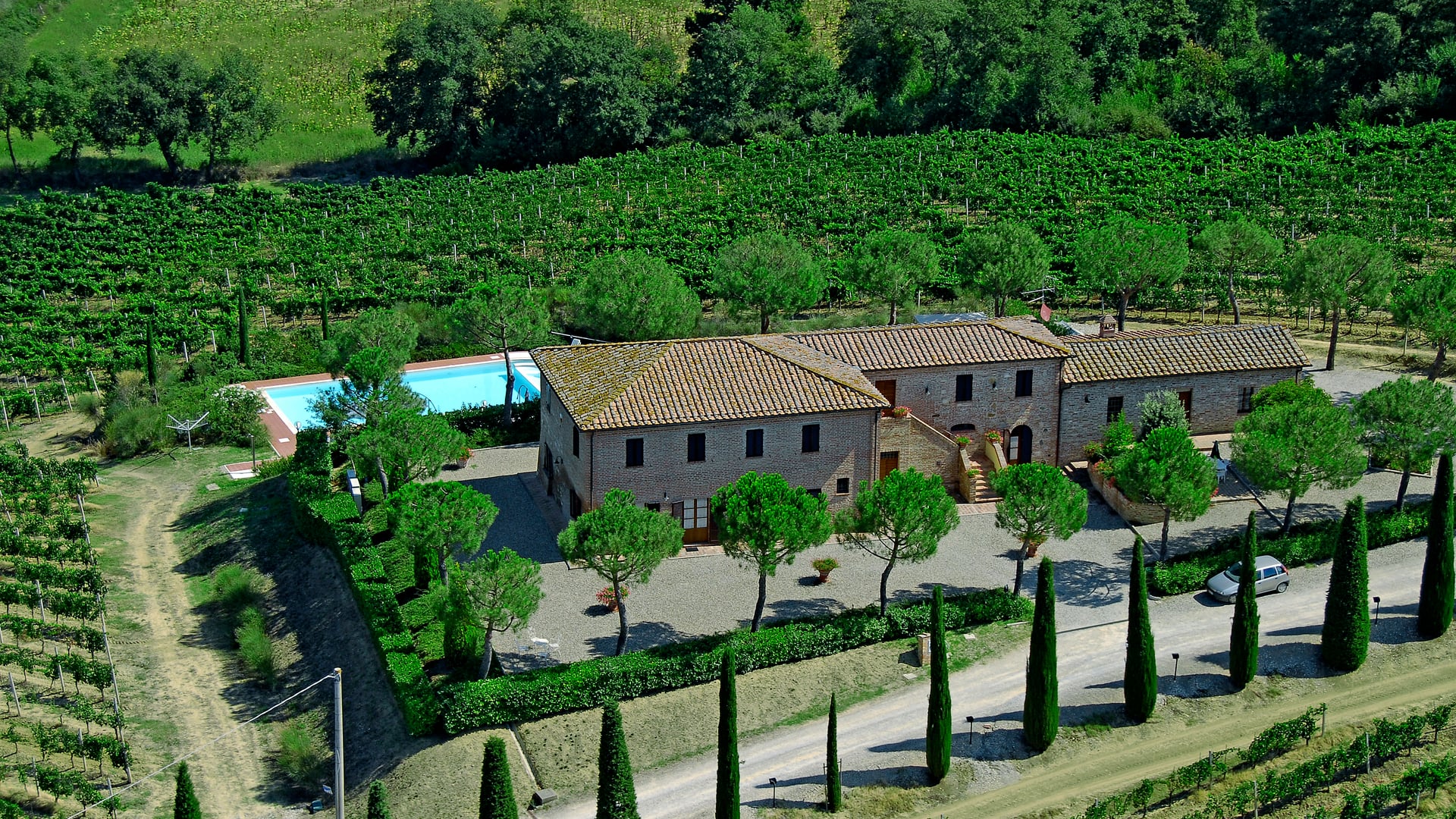
The Business Case for Turning Farms Into Destinations
An institutional investment thesis on agritourism and agrihood real estate: evaluating asset stacking, farm-to-table culinary multipliers, property-to-product loops, and dual-underwriting models across productive rural landscapes.
By Guzlands Editorial
.
# The Business Case for Turning Farms Into Destinations
For many years, agricultural land and hospitality real estate were treated as fundamentally different assets. A farm produced crops. A hotel sold rooms. A restaurant sold food. Tourism occasionally brought visitors into rural areas, but the land itself was usually treated as a background rather than as an economic component of the hospitality business. That distinction is becoming less useful. Across different markets, farms, plantations, orchards, vineyards and rural estates are increasingly being considered as potential hospitality assets because the land can generate value through more than one activity. Agriculture can remain the productive base while accommodation, food and beverage, experiences, events, education and retail create additional sources of revenue. The result is not simply a farm with guest rooms. At its strongest, it is an integrated hospitality business built around a productive landscape.
The concept is not entirely new. Agritourism and rural hospitality have existed for decades in Europe, North America and parts of Asia. What is changing is the sophistication of the business model and the growing relevance of the underlying real estate. The Indian Ministry of Tourism now explicitly recognises through NIDHI+, defining a farm stay as rural accommodation located on an operating farm. The Ministry also maintains national strategies for rural tourism and rural homestays and states that agri-tourism and farm stays are developed and promoted primarily by individual states and Union Territories.
The opportunity is therefore not simply cultural or experiential. It is commercial.
A farm can potentially produce agricultural revenue while its buildings and landscape generate hospitality revenue. A restaurant can create value from the produce. A retail operation can monetise the agricultural output beyond the property. Experiences can increase customer acquisition and spend. Accommodation can turn a daytime destination into an overnight one. When these activities are designed correctly, the land becomes a platform supporting several interconnected businesses.
The difficult part is making the economics work.
Agriculture Gives Hospitality Something It Normally Has to Manufacture
Hotels spend considerable money creating a sense of place. Designers choose materials, landscape architects create gardens, chefs build narratives around local ingredients and marketing teams attempt to communicate authenticity. A working farm begins with many of these characteristics already embedded in the property. The crops, landscape, agricultural processes, seasonal changes, buildings and relationship with the surrounding community can all become part of the guest proposition without being artificially created.
This is particularly powerful because hospitality increasingly competes on differentiation. A standard hotel room can be reproduced in thousands of locations. A working vineyard, coffee plantation, orchard or regenerative farm with its own produce is much more difficult to replicate. The physical environment becomes part of the product.
The commercial implication is that a farm can potentially support a higher-value hospitality proposition than an equivalent rural property without a productive use.
Consider a 20-acre agricultural property with an existing house. As a purely agricultural asset, its value may be primarily determined by land quality, crop productivity, location and the economics of the farm. If the same property can legally and commercially support eight guest rooms, a restaurant using estate produce and guided farm experiences, the income profile changes. The agricultural operation continues to generate revenue while the hospitality business monetises the same land through a different customer relationship.
That does not mean hospitality automatically increases land value. It means the property potentially has .
The distinction is important.
A farm that stops farming and becomes a conventional resort may lose the very characteristic that differentiates it. A farm that continues agricultural production while carefully integrating hospitality can create a stronger and more defensible proposition.
The Business Model Works Because the Same Asset Can Serve Different Customers
The strongest reason to combine farming and hospitality is not simply that guests enjoy being around agriculture. It is that different activities can monetise the same property at different times and through different customer groups.
A farm can sell crops wholesale.
The same produce can be used in an on-site restaurant.
The restaurant can serve overnight guests.
It can also attract outside diners.
The farm can offer tours or workshops.
The property can accommodate overnight visitors.
Retail can sell coffee, preserves, honey, wine, spices or other products.
Events can activate the property during selected dates.
This is a form of . Multiple businesses are built around one underlying real estate asset.
Suppose a farm spends ₹20 lakh a year operating its agricultural component. If the farm produces ₹28 lakh in agricultural sales, it has generated ₹8 lakh before considering land ownership and other costs. Now imagine that the same property supports a hospitality operation generating ₹1.2 crore in room revenue and ₹50 lakh in restaurant and experience revenue. The agricultural operation has not disappeared. It has become one component of a larger economic system.
The numbers are illustrative, but the principle is important.
The land is working across several revenue streams.
The operator is not simply asking how much a farm earns or how much a hotel earns. The question becomes how much .
That is a fundamentally different way to assess rural hospitality real estate.
Accommodation Is Only One Layer of the Opportunity
The natural instinct is to think about farm stays in terms of rooms. That is useful, but rooms are often the least differentiated part of the proposition.
A property with six beautifully designed rooms may be valuable because the rooms provide customers with access to everything else on the estate.
This allows relatively small properties to operate at a premium when demand is strong.
Consider a six-room farm stay with an average realised room rate of and annual occupancy of 50%. Six rooms provide 2,190 available room nights. At 50% occupancy, 1,095 nights are sold, generating approximately in gross accommodation revenue.
At 60% occupancy, room revenue rises to approximately .
Now assume the property generates an additional ₹35 lakh through food, experiences and retail.
Total gross revenue becomes approximately ₹1.66 crore at 50% occupancy.
The important point is that a small property does not necessarily need high room inventory to produce meaningful revenue when the underlying land supports multiple forms of spending.
This is also why low-density hospitality can be attractive on agricultural land. Building fewer rooms can preserve the landscape while allowing the operator to monetise it more intensively through experiences, food and events.
The objective is not to maximise the number of buildings.
It is to maximise the economic productivity of the property without destroying the characteristics that make it valuable.
The Restaurant Can Become the Bridge Between Agriculture and Hospitality
Food is one of the strongest connections between farming and hospitality because it provides a direct commercial relationship between the land and the customer.
A farm can produce vegetables, fruit, herbs, coffee, spices, dairy, honey or other agricultural products. A restaurant can then convert those products into higher-value experiences.
The economic chain becomes:
The same ingredient can therefore generate value at several stages.
Suppose a farm produces tomatoes that are sold wholesale for ₹40 per kilogram. The same tomatoes, when used as part of a destination restaurant menu, become one component of a meal sold for ₹800 or ₹1,500 per guest. The restaurant is not capturing the entire difference as profit because labour, kitchen costs, service, rent or property costs also exist. But the principle illustrates the difference between .
This is one reason farm-based restaurants can be commercially interesting.
The agricultural operation provides authenticity, while the restaurant provides a higher-value customer interface.
The model can be even stronger when visitors can purchase the farm's products directly. Coffee, cheese, preserves, honey, oils, spices and other goods can extend the commercial relationship beyond the meal.
The farm is no longer simply supplying the restaurant.
The restaurant is helping the farm reach a consumer willing to pay for provenance, quality and experience.
This is where agriculture becomes part of the hospitality business model rather than simply part of the scenery.
A Farm Can Become a Destination Without Becoming a Resort
There is a significant difference between destination hospitality and conventional resort development.
A resort generally creates a self-contained environment around accommodation and amenities. A farm-based destination can work differently. Its primary attraction may be the land itself and what happens there.
That means the operator may not need extensive built infrastructure.
A walking route through an orchard can be an experience.
A coffee harvest can become an educational activity.
A working kitchen garden can supply a restaurant.
A farm shop can create retail revenue.
A seasonal harvest can create an annual event.
A traditional farmhouse can become accommodation.
This can reduce the need to construct large numbers of artificial attractions.
The economics can consequently be more efficient because the operator is monetising characteristics that already exist.
The Ministry of Tourism's national rural tourism strategy explicitly identifies rural homestays and agrarian lifestyles as mechanisms through which tourism can support rural communities and diversify local income. It describes rural homestays as low-scale and low-density accommodation and links them with local art, crafts, agriculture and community development.
That model is important because it suggests that rural hospitality does not have to replicate the physical logic of an urban hotel.
The land can remain productive.
The accommodation can remain relatively small.
The experience can come from the environment and the people working within it.
The Capital Requirement Can Be Lower Than a Conventional Resort—But Not Always
One reason farms attract hospitality investors is the possibility of creating a differentiated property without building a large resort from scratch.
Suppose an existing 15-acre farm includes a structurally sound house, basic access, electricity and water.
A six-room hospitality conversion might require depending on the building's condition and positioning. A new-build resort with a comparable guest experience could require several times that amount once land development, infrastructure, construction and site work are included.
The advantage comes from reusing existing assets.
But agricultural properties also contain unusual capital requirements.
Roads may need improvement.
Water storage may need expansion.
Wastewater systems may need to be upgraded.
Electrical capacity may need to increase.
Guest parking may need to be created without damaging agricultural operations.
Farm equipment and guest movement need to coexist.
Older agricultural buildings may need significant structural or safety upgrades.
Therefore, the idea that farm hospitality is “cheap” is misleading.
A better way to describe it is .
The more conversion required, the less attractive the economics become.
A property with an excellent farmhouse, mature landscape and existing utilities may be far more valuable than a larger parcel of raw agricultural land.
Land Size Does Not Automatically Create Value
Large agricultural properties can appear attractive because they offer scale, privacy and future potential. But land has carrying costs.
An estate needs maintenance.
Trees need management.
Roads need upkeep.
Water systems need attention.
Fences need replacement.
Agricultural labour needs to be paid.
Large landscapes create costs even when guests are not present.
This means an investor should not automatically favour the largest available farm.
Consider two properties.
Property A has 30 acres and six guest rooms.
Property B has 12 acres and six guest rooms.
Property A produces ₹1.6 crore of annual hospitality revenue and ₹30 lakh of agricultural revenue but requires ₹1 crore in annual property and operating costs.
Property B produces ₹1.4 crore of hospitality revenue and ₹18 lakh of agricultural revenue but requires ₹65 lakh of annual operating costs.
Property A has more land and slightly more revenue.
Property B may have much stronger operating economics.
The important metric is therefore not acreage.
It is .
In some situations, a smaller property with stronger infrastructure, better access and more intensive productive use can be a superior investment.
The Location Still Has to Work
A farm cannot become a hospitality destination simply because it is beautiful.
Customers still have to reach it.
That creates one of the central tensions in rural hospitality.
The property needs enough separation from the city to feel distinctive, but not so much that customers consider the journey unreasonable.
The appropriate travel time depends on the customer and the experience.
A weekend farm stay near a major city may work within a two- to three-hour drive.
A specialised culinary retreat may justify a longer journey.
A destination restaurant may require a stronger proposition still.
A luxury agricultural estate can perhaps operate further from urban centres because the exclusivity itself creates value.
The correct location is therefore determined by the .
A guest is willing to travel further when the destination offers something they cannot easily find closer to home.
This is why rural hospitality can sometimes succeed without conventional tourism infrastructure. The property itself becomes part of the reason for travel.
But the business should not confuse remoteness with exclusivity.
Difficult access is only valuable when the customer perceives the resulting experience as worth the inconvenience.
Agriculture Can Help Solve Seasonality
Seasonality is one of the major risks in rural hospitality. Demand can fluctuate with weather, holidays, school calendars and travel patterns. Agriculture can provide a complementary economic cycle.
Coffee has harvest periods.
Fruit has harvest periods.
Wine has harvest and production cycles.
Certain crops create seasonal events.
These agricultural calendars can become demand drivers.
A vineyard can build tourism around harvest.
A coffee estate can create plantation experiences around processing.
An orchard can create seasonal picking programmes.
A farm can structure culinary experiences around the availability of produce.
This creates something important for hospitality: .
The property is no longer selling exactly the same product every month.
It can evolve with the agricultural calendar.
This does not eliminate seasonality, but it can make seasonality commercially useful. A property that changes its experience according to the crop cycle can create distinct reasons to visit rather than relying entirely on generic accommodation.
The challenge is to ensure that the agricultural calendar is genuine and that the experiences do not interfere with farm operations.
The Agricultural Business Needs to Remain Real
The biggest strategic mistake in farm hospitality is converting agriculture into decoration.
Guests can increasingly distinguish between an actual working farm and a resort designed to look agricultural.
If a property claims to be a farm stay but the agricultural component is negligible, the proposition can lose credibility.
More importantly, the economics become weaker.
The property now has a large landscape that consumes money without generating agricultural output.
The stronger model keeps the productive use intact.
Coffee is grown and harvested.
Crops are actually sold or consumed.
Orchards produce fruit.
Livestock operations continue where appropriate.
Farm workers remain part of the operating system.
Guests observe real activities within appropriate safety and operational boundaries.
The distinction matters because agriculture creates an experience that cannot easily be replicated through decoration.
The working landscape becomes the product.
This also means the operator needs agricultural competence. Hospitality teams cannot simply assume they can manage a farm. Agricultural production has different labour cycles, weather risks, input requirements and market dynamics. The two businesses may share ownership but require different expertise.
A successful model therefore needs both hospitality management and agricultural management.
The Community Can Become Part of the Economic Model
Rural hospitality can also create value outside the property itself.
Local food producers can become suppliers.
Guides can provide experiences.
Craftspeople can become part of workshops.
Local cooks can contribute to culinary programmes.
Drivers, maintenance workers and other service providers can participate in the visitor economy.
This creates a broader economic ecosystem around the property.
The Ministry of Tourism's rural tourism strategy specifically links rural homestays with community income, local art and crafts, rural revitalisation and local participation.
For investors, the benefit is not only social.
A connected local ecosystem can make the hospitality product stronger while reducing the need for the property to build every capability internally.
A farm stay does not need to manufacture every guest experience.
The region can provide some of them.
This can create a more authentic product and potentially a lower fixed-cost model.
It also makes the property more connected to the destination rather than functioning as an isolated resort.
Farm Hospitality Can Create Stronger Brand Economics
One of the most valuable characteristics of a farm-based hospitality property is that the brand can extend beyond accommodation.
Consider a coffee estate.
The guest stays at the property.
They drink the estate coffee.
They eat at the estate restaurant.
They visit the coffee fields.
They buy a bag of beans before leaving.
Later, they order the same coffee online.
The hospitality business has created a customer relationship that extends beyond the room.
The same model can work with olive oil, wine, honey, cheese, spices, fruit products, preserves or other agricultural goods.
This creates what could be called a .
The land produces the product.
The property provides the experience.
The experience creates the customer.
The customer purchases the product.
The product extends the relationship beyond the stay.
This can improve customer lifetime value without requiring the acquisition of a completely new customer for every transaction.
It can also create a stronger brand moat because the product is tied to the property itself.
The challenge is scale. Agricultural products are not always sufficient to support substantial retail businesses, and food production introduces its own regulatory and distribution requirements. But even a relatively small retail operation can increase total guest spend and extend brand reach.
The Hotel Model Starts to Look Different
Once agriculture, food, accommodation and experiences are combined, the property starts to resemble something different from a traditional hotel.
Imagine a 10-room estate with:
- 10 guest rooms
- A 40-seat restaurant
- A farm shop
- Agricultural production
- Coffee or wine processing
- Guided experiences
- Small events
The room business may generate ₹1.5 crore.
The restaurant may generate ₹80 lakh.
Retail may generate ₹20 lakh.
Experiences may generate ₹15 lakh.
Events may generate ₹25 lakh.
Agriculture may generate ₹30 lakh.
The property could therefore touch approximately .
That does not mean the property is automatically worth more than a conventional hotel. Each business has different costs, margins and management requirements.
But it demonstrates the central opportunity.
The property is no longer dependent on room revenue alone.
Its economic output is distributed across several customer relationships.
The Investment Case Depends on Integration
Multiple revenue streams can create resilience, but they can also create complexity.
An estate restaurant needs kitchen staff.
Agriculture needs skilled workers.
Accommodation needs housekeeping.
Events need operational planning.
Retail needs inventory.
Experiences need guides and safety protocols.
If all of these activities are poorly coordinated, costs can become excessive and the guest experience can suffer.
The objective is therefore not diversification for its own sake.
It is .
The businesses should share infrastructure where possible.
The restaurant should use the farm's output.
The farm should support the guest experience.
The accommodation should create customers for the restaurant.
The restaurant should attract visitors who may later purchase products.
The event business should fill rooms rather than compete with them.
The agricultural operation should remain productive rather than becoming decorative landscape.
When these relationships work, the property operates as one system.
That is where the real investment advantage begins.
Legal Feasibility Comes Before the Hospitality Concept
The biggest constraint on agricultural hospitality is often not demand. It is what the land can legally support.
Agricultural land is not automatically development land.
A farm may be able to operate accommodation in one jurisdiction and face materially different requirements in another. Conversion requirements, land-use classifications, local planning rules, building permissions, environmental regulations, water rights, access arrangements and food-service requirements can all affect the feasibility of the project.
India's Ministry of Tourism explicitly states that development and promotion of agri-tourism and farm stays is handled by the relevant State Government or Union Territory, rather than through one national agri-tourism approval framework.
This makes site-specific due diligence essential.
The fact that one farm stay operates legally in a particular region does not establish that another agricultural property can be used in the same way.
Investors should therefore establish the legal status of the land and existing structures before incorporating hospitality revenue into their valuation.
A theoretical plan for 15 cottages is meaningless until the land can legally and practically support them.
This is particularly important because the investment case can change entirely if only the existing residential structure can be used.
The Real Estate Becomes More Valuable When the Uses Reinforce One Another
A farm-based hospitality property has the potential to generate value through several layers:
The investor's challenge is to determine how much of that potential is real.
Not every farm can become a destination.
Not every farmhouse should become a hotel.
Not every agricultural property should add a restaurant.
The strongest assets usually have a combination of characteristics: compelling landscape, sufficient access, viable agricultural production, existing structures, reliable infrastructure, clear customer demand and a legal pathway for hospitality use.
When these conditions align, the property can become significantly more productive without requiring a complete transformation of the land.
This is what makes agricultural hospitality interesting from a real estate perspective.
The investor is not merely changing the use of the land.
They are increasing the number of ways in which the land can generate economic value.
What Investors Should Look For
A serious evaluation should begin with the agricultural asset.
How many acres are genuinely productive?
What crops are grown?
What are the historical yields?
What is the annual agricultural revenue?
What are the labour and input costs?
What buildings already exist?
What is their condition?
What is the water situation?
How reliable is electricity?
How accessible is the property?
What hospitality supply exists nearby?
What are comparable properties charging?
How seasonal is the destination?
What hospitality uses are legally possible?
How much capital is required?
The hospitality model should then be built from the answers.
If six rooms are viable, model six.
If ten are viable, model ten.
Do not build 20 because the property has enough land.
Then calculate revenue.
Take the room rate.
Multiply by available room nights.
Apply realistic occupancy.
Add F&B and other revenue conservatively.
Then deduct labour, utilities, maintenance, agricultural costs, marketing, distribution, taxes and capital expenditure.
Finally, compare the resulting cash flow with the total investment.
This process prevents the agricultural story from overwhelming the financial reality.
The Most Valuable Asset May Be the Relationship Between Farm and Guest
The fundamental attraction of farm-based hospitality is not that tourists enjoy farms. It is that agriculture can provide a form of that conventional hospitality often struggles to create.
A working landscape has its own products, seasons, people, processes and physical characteristics.
Hospitality provides a way to monetise access to that system.
The guest stays on the land.
The guest eats what the land produces.
The guest learns how the land works.
The guest buys something produced there.
The guest returns because the experience is tied to a place rather than a generic hotel room.
That creates a business model with several layers of value.
The challenge is preserving the balance.
Too much development and the farm disappears.
Too little hospitality and the economic opportunity remains underdeveloped.
Too many commercial activities and the operation becomes complicated.
Too much emphasis on agriculture and the guest experience may become secondary.
The strongest projects find the point where the two businesses make each other stronger.
From Farm to Hospitality Asset
The idea of turning farms into destinations should therefore not be interpreted as another hospitality trend.
It is a different way of looking at land.
An agricultural property can be more than a source of crop revenue. With the appropriate legal framework, infrastructure and market demand, it can potentially support accommodation, dining, experiences, retail and events while keeping agriculture as its productive foundation. India's national tourism framework already recognises farm stays as a distinct accommodation category and has developed national strategies for rural tourism and rural homestays.
For property owners, this can create a new way to think about underutilised estates.
For hospitality operators, it expands the universe of properties worth considering.
For investors, it introduces the possibility of combining agricultural income with hospitality income and long-term real estate value.
For developers, it presents an alternative to conventional resort construction.
But the opportunity is not in putting cottages on farmland.
It is in finding properties where .
That is where a farm stops being simply a piece of agricultural real estate and becomes a hospitality asset.
Find the right property for your next venture.
Explore Properties