
How to Start a Hotel Business
A practical guide to building a hospitality business with discipline, capital clarity, and long-term intent — from market thesis and financial modelling to operations, pricing, and guest experience.
Guzlands Editorial
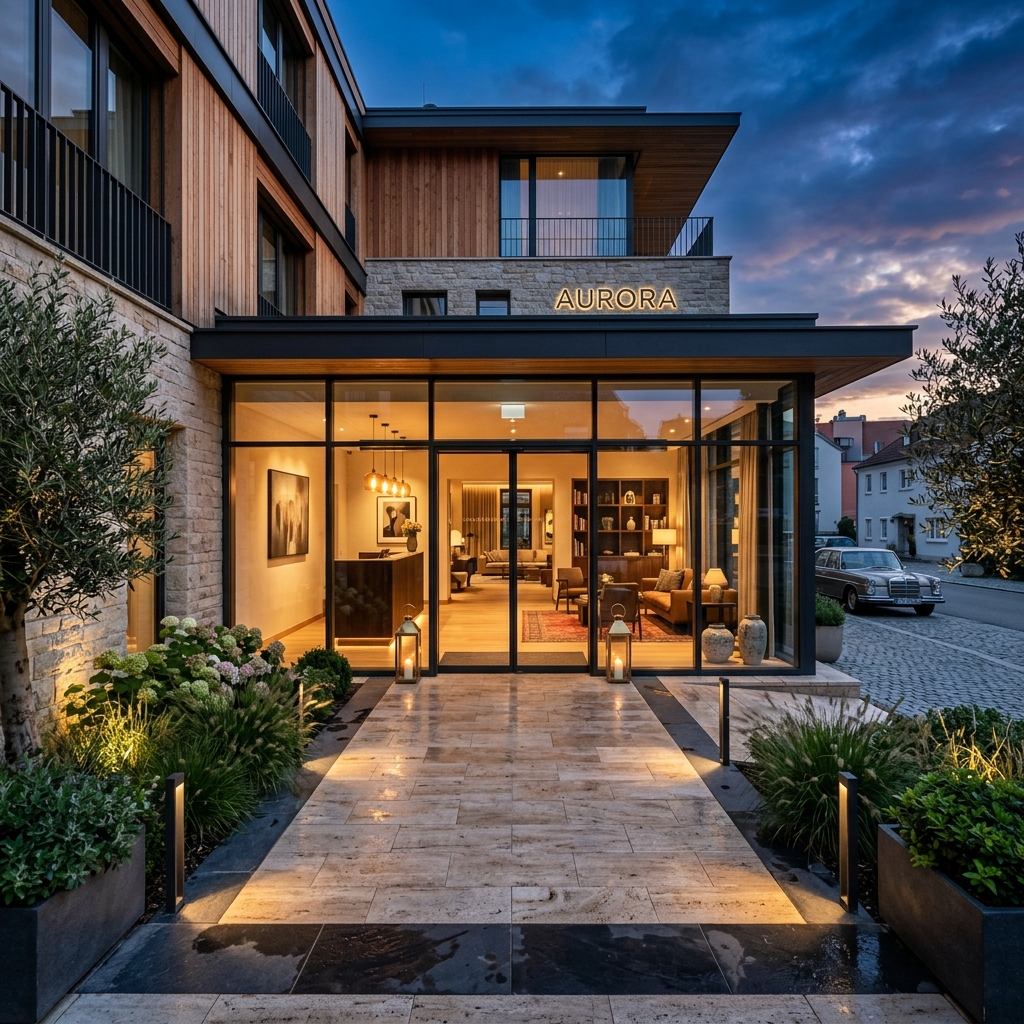
A practical guide to building a hospitality business with discipline, capital clarity, and long-term intent.
Starting a hotel business is not simply a matter of acquiring a property, furnishing rooms, hiring staff, and opening doors.
A hotel is a real estate asset, an operating business, a service organization, a brand, a distribution machine, a local employer, and a guest experience system — all at once. That is what makes the category attractive. It is also what makes it unforgiving.
A good hotel can become a durable business with strong asset value, recurring demand, brand equity, and local relevance. A poorly planned hotel can become a capital trap: expensive to build, difficult to operate, heavily dependent on occupancy, and exposed to seasonality, regulation, staffing issues, maintenance costs, and shifting travel patterns.
The difference is rarely luck alone. It usually comes down to discipline before launch: the right market, the right property, the right positioning, the right capital structure, the right operating model, and a clear understanding of what the hotel is meant to become.
“The hotel business rewards imagination, but only when imagination is supported by numbers.”
Start with the business thesis, not the property
Many first-time hotel owners begin with a property. They see a building, a piece of land, a villa, a heritage structure, a resort site, or an underused asset and imagine what it could become. That instinct is understandable.
Hotels are physical and emotional businesses. A compelling location can create immediate conviction.
But the better starting point is not the property. It is the business thesis.
Before asking “Can this become a hotel?” the better question is: “What kind of hotel business should exist here, for whom, and why would it win?”
A hotel cannot be evaluated only by its beauty or availability. It must be evaluated against demand. Who will stay there?
Why will they choose it? How often will they come? What will they pay?
What alternatives do they have? What will the property cost to acquire, build, lease, renovate, staff, maintain, market, and operate? How long will it take to stabilize?
What happens in low season? What happens when rates fall? What happens when repairs, licenses, or staffing costs rise?
A hotel business begins with a point of view on the market. That point of view may be built around business travel, leisure travel, destination tourism, wellness, food, weddings, retreats, budget accommodation, serviced apartments, boutique stays, luxury hospitality, heritage tourism, airport transit, extended stay, religious travel, medical travel, or mixed-use hospitality.
Each has different economics.
A business hotel depends on weekday demand, corporate accounts, location convenience, meeting facilities, and consistent service. A resort depends on destination appeal, seasonality management, experience design, food and beverage strength, and leisure distribution. A boutique hotel depends on identity, design, service quality, and pricing power.
A budget hotel depends on efficiency, occupancy, cost control, and reliable distribution. A wedding-led property depends on events infrastructure, banquet economics, local reputation, parking, access, and sales capability.
The property should serve the thesis. Not the other way around.
Understand the market before committing capital
Hotels do not operate in theory. They operate in a market.
Market study is not a formality. It is one of the most important stages of starting a hotel business. Without it, the owner risks building a hotel for an imagined guest rather than a real one.
A serious market assessment should examine demand drivers, competing supply, average pricing, seasonality, access, infrastructure, local regulations, tourism patterns, corporate activity, events, transport links, future development, and the broader economic profile of the area.
The key question is not whether people visit the location. The key question is whether enough people will pay enough, often enough, for the kind of hotel you intend to build.
A place may receive tourists but not support premium rates. A city may have strong commercial activity but already be oversupplied with hotels. A beautiful destination may attract weekend demand but remain weak midweek.
A pilgrimage or event-led market may produce high peaks but long troughs. A remote property may attract attention online but struggle with access, staffing, logistics, and repeatability.
The market must support the operating model.
For a hotel business, occupancy and average daily rate are central, but they are not enough. Revenue per available room, cost per occupied room, payroll, utilities, maintenance, marketing costs, commissions, food and beverage margins, debt service, taxes, and capital expenditure reserves all influence viability.
A hotel that looks full may still be weak if rates are low and operating costs are high. A hotel with premium rates may still struggle if occupancy is too volatile. A hotel with strong room revenue may underperform if maintenance, staffing, and debt are poorly structured.
The market study should lead to a grounded conclusion: what size of hotel makes sense, what positioning is viable, what rates are realistic, what occupancy can be expected, what amenities are necessary, and what capital exposure is acceptable.
Choose the right hotel format
There is no single hotel business model. The right format depends on the market, property, capital, operator capability, and guest segment.
A small boutique hotel may work well in a culturally rich neighborhood or leisure destination where design, food, and personal service can command premium pricing. A limited-service hotel may suit transport corridors, business districts, or price-sensitive markets where guests want cleanliness, reliability, and convenience more than extensive amenities. A resort may need land, landscape, recreation, food and beverage, event capability, and a strong destination story. A serviced apartment model may suit extended stays, medical travel, corporate relocations, or urban centers with longer booking patterns.
The format determines the economics.
A full-service hotel is more complex than a room-led property. Restaurants, bars, spas, banquets, pools, and experiences can create revenue, but they also increase capex, staffing, maintenance, compliance, and management burden. Amenities should not be added because they look impressive. They should be added because the target guest values them and the business can operate them well.
Many hotel projects fail by overbuilding for the market. They add facilities that increase costs without increasing pricing power. They design for aspiration rather than demand.
They assume the property must feel “premium” before proving that guests will pay premium rates. They confuse visual ambition with commercial strategy.
“A disciplined hotel concept should define what the property will do well and what it will deliberately avoid. For a first hotel, simplicity often beats complexity.”
A smaller, sharper, better-run property can outperform a larger, unfocused one. Hospitality is already operationally demanding. Every additional facility becomes another system to staff, maintain, market, and manage.
The strongest format is not the most impressive on paper. It is the one the market wants, the capital can support, and the operator can execute consistently.
Decide whether to buy, lease, build, convert, or manage
The hotel business can be entered through different asset routes. Each has a different risk profile.
Buying a hotel or property gives the owner control and potential long-term real estate appreciation, but it requires significant capital and exposes the investor to asset risk. Leasing reduces upfront acquisition cost but creates fixed obligations that can become dangerous during weak periods. Building from scratch allows custom planning but carries development risk, approval delays, construction overruns, and a longer time before revenue begins.
Converting an existing building can be faster, but hidden structural, design, compliance, and operational issues can be expensive. Managing a hotel for another owner reduces asset exposure but depends on capability, contracts, reputation, and operational performance.
The choice should be based on capital, experience, risk tolerance, and strategic intent.
A founder with limited capital may be better off starting with a lease, management contract, or small conversion rather than purchasing land or building a large hotel. An investor with long-term real estate appetite may prefer ownership. A hospitality operator with strong systems may scale through management agreements. A family-owned property may be repositioned into hospitality if the asset has location strength and the owner can fund the upgrade.
There is no universally superior route. But there is a dangerous route: entering an asset-heavy hotel project without enough capital cushion, operating knowledge, or market evidence.
“Hotels consume capital before they produce confidence.”
Construction takes longer than expected. Licenses take time. Pre-opening costs rise.
Staff must be hired before revenue stabilizes. Marketing begins before cash flow is predictable. Maintenance starts immediately.
Guest expectations are unforgiving from day one. The structure must allow the business to survive the early period.
Build a realistic financial model
A hotel business should never be started without a financial model.
The model does not need to be unnecessarily complex, but it must be honest. It should estimate project cost, opening costs, monthly operating expenses, revenue assumptions, break-even occupancy, debt obligations, working capital needs, and expected return.
At minimum, the model should include: room count, expected average daily rate, expected occupancy, room revenue, food and beverage revenue, event revenue if applicable, other income, payroll, utilities, repairs and maintenance, housekeeping supplies, software, insurance, licenses, marketing, sales commissions, payment fees, property tax, rent or debt service, management fees, and capital reserve.
The most important part is not the base case. It is the downside case.
What happens if occupancy is 20% lower than expected? What happens if rates must be discounted? What happens if opening is delayed by six months?
What happens if renovation costs rise? What happens if staffing costs increase? What happens if the market becomes more competitive?
What happens if a major demand driver disappears?
A hotel business must be able to withstand stress.
Many projects are built on optimistic assumptions: high occupancy, strong rates, fast stabilization, controlled costs, smooth approvals, and efficient teams. Reality is usually less generous. The model should show how much cash is needed not only to open the hotel, but to operate it until it stabilizes.
This is where many first-time owners underestimate the business. They budget for property and interiors, but not enough for pre-opening salaries, training, technology, marketing, launch campaigns, photography, working capital, replacement items, early operating losses, and unexpected repairs.
A hotel does not become stable the day it opens. It earns stability over time.
Position the hotel clearly
A hotel needs a clear position in the market. Positioning is not a slogan. It is the answer to why a specific guest should choose this hotel over available alternatives.
A hotel may compete on location, price, design, service, food, privacy, wellness, convenience, heritage, views, community, events, long-stay comfort, family suitability, business efficiency, or destination access. But it cannot credibly compete on everything.
A clear hotel concept should define the target guest, the occasion of stay, the price band, the service style, the design language, the food and beverage role, the operating promise, and the emotional tone of the experience.
For example, a boutique hotel for design-conscious leisure travelers has a different logic from a midscale hotel for business travelers. A family resort has a different logic from an adults-only wellness retreat. A wedding-led property has a different logic from an urban micro-hotel. A luxury villa retreat has a different logic from a budget transit hotel.
The clearer the position, the easier it becomes to make decisions. What rooms should look like. What amenities matter.
What technology is needed. What staff profile is required. What photography should communicate.
What distribution channels matter. What rate strategy makes sense. What partnerships should be developed.
What guest expectations must be met.
Weak positioning creates operational confusion. The hotel tries to serve everyone and becomes memorable to no one.
Design for operations, not only appearance
Hotel design must serve the guest, the brand, and the operating model.
A visually attractive hotel can still fail operationally if it is inefficient to clean, difficult to maintain, poorly planned, uncomfortable for staff, or expensive to run. Design decisions affect labor, maintenance, utilities, guest satisfaction, and long-term profitability.
Room layouts influence housekeeping speed. Material choices influence durability. Kitchen planning influences service quality.
Storage affects operations. Back-of-house circulation affects staff productivity. Lighting affects mood and energy costs.
Bathrooms affect maintenance burden. Laundry planning affects daily efficiency. Reception design affects arrival experience and staffing needs.
Many new hotel owners overinvest in visible areas and underinvest in systems. Guests notice design, but they also notice weak water pressure, poor acoustics, slow service, uncomfortable beds, bad lighting, unreliable Wi-Fi, inconsistent housekeeping, and poorly trained staff. The best hotel design is not just photogenic. It is durable, serviceable, intuitive, and aligned with the operating promise.
For first-time hotel owners, restraint is valuable. Do not add operational complexity for aesthetic drama. Do not choose fragile materials that cannot survive commercial use.
Do not design spaces that require too much staff to run. Do not create a restaurant, spa, bar, or event space unless the business case is clear.
A hotel is not a showroom. It is a living operation.
Secure licenses, approvals, and compliance early
Hotel businesses are heavily shaped by local regulation.
The specific requirements vary by country, state, city, and asset type, but they may include business registration, building permissions, fire safety approvals, health and sanitation licenses, food and beverage licenses, alcohol permits, music licenses, signage approvals, tourism registrations, labor compliance, tax registrations, environmental permissions, zoning compliance, parking requirements, accessibility standards, and short-term accommodation rules.
These cannot be treated as afterthoughts. A hotel project can be delayed, penalized, restricted, or shut down if compliance is weak. Even when enforcement appears relaxed in a local market, serious hospitality businesses should build with regulatory discipline. It protects the asset, the brand, the investor, the staff, and the guest.
Compliance also affects valuation. A hotel with unclear licenses, poor documentation, informal labor practices, weak safety systems, or unresolved property issues is riskier to finance, sell, franchise, insure, or scale.
Legal and regulatory review should begin before committing to the property. The owner should verify whether hospitality use is permitted, whether the building can meet fire and safety norms, whether food and beverage operations are allowed, whether alcohol service is possible if needed, whether expansion is permitted, whether parking or access creates restrictions, and whether there are title, lease, zoning, or environmental issues.
A beautiful property with unresolved compliance risk is not a bargain. It is a liability waiting to surface.
Build the operating team carefully
A hotel business is delivered through people.
Even a small hotel requires operational discipline across front office, housekeeping, maintenance, reservations, revenue management, accounts, food and beverage, security, vendor management, guest relations, and leadership.
The owner must decide early whether to self-operate, hire a general manager, bring in a hotel management company, franchise with a brand, or use a hybrid model.
Self-operation gives control but requires knowledge. Hiring a strong general manager can professionalize the property, but the owner must still understand the business well enough to supervise performance. A management company can bring systems and experience, but fees and alignment matter. A franchise can provide brand recognition, distribution, and standards, but may reduce independence and add compliance obligations.
The key is not to underestimate hotel operations. Hospitality looks simple from the guest side because the best operations hide complexity. Behind a smooth stay is scheduling, training, procurement, cleaning standards, maintenance planning, complaint handling, revenue strategy, audits, vendor coordination, and daily decision-making.
For a new hotel, the pre-opening team is critical. They must help set standards, recruit staff, prepare operating procedures, choose vendors, configure systems, plan launch inventory, train teams, test rooms, create guest communication templates, prepare emergency protocols, and run soft-opening checks.
Poor openings damage reputation early. In hospitality, the first wave of guest reviews can shape demand for months.
Create strong systems before opening
A hotel should not open casually.
Before opening, the owner must establish core systems: property management software, booking engine, channel manager, accounting process, payment systems, inventory control, housekeeping checklists, maintenance logs, guest feedback process, standard operating procedures, staff training manuals, emergency protocols, vendor contracts, pricing strategy, and reporting dashboards.
These systems do not need to be overcomplicated. But they must exist.
A hotel without systems becomes dependent on individual memory. That creates inconsistency. Guests receive different answers.
Rooms are cleaned differently. Maintenance issues repeat. Pricing becomes reactive.
Complaints are handled poorly. Costs leak. Staff turnover becomes painful because knowledge leaves with people.
Systems protect the guest experience and the owner’s capital. They also make the business more scalable. Even if the first hotel is small, disciplined systems make it easier to improve, delegate, audit, and eventually expand.
The goal is not bureaucracy. The goal is repeatability.
Build distribution before launch
A hotel does not sell itself.
Even a beautiful property in a good location needs distribution. Guests need to discover it, trust it, understand it, and book it.
Distribution includes online travel agencies, direct booking, search visibility, social media, corporate relationships, travel agents, destination management companies, event planners, wedding planners, local partnerships, food and beverage visibility, public relations, and repeat guest communication.
The right mix depends on the hotel type. A business hotel may need corporate contracts and location-driven search. A boutique hotel may benefit from editorial storytelling, design media, social visibility, and direct booking.
A resort may need travel trade, high-quality photography, packages, destination content, and strong reputation management. A wedding property may depend on planners, local networks, banqueting sales, and event showcases.
New owners often underestimate the cost of demand generation. Opening a hotel is not the same as creating demand.
Photography, website, booking engine, OTA setup, content, launch offers, local partnerships, review generation, search optimization, and sales outreach should begin before the hotel opens. The pre-opening period should create awareness, not silence.
A hotel launch should be treated as a commercial campaign. Not just a ribbon-cutting.
Price with discipline
Hotel pricing is dynamic. Rates should respond to demand, seasonality, day of week, events, lead time, occupancy, competitor pricing, and guest segment. But pricing should still be disciplined.
A common mistake is to discount aggressively in the early months to create occupancy. This can generate bookings but weaken market perception, attract poor-fit guests, damage future pricing power, and create dependency on low-margin channels.
Another mistake is to price too high because the owner is emotionally attached to the property or needs to justify the investment. The market does not pay for the owner’s cost. It pays for perceived value relative to alternatives.
The right pricing strategy balances confidence with evidence. A hotel should understand its competitive set, rate ceiling, minimum viable rate, seasonal patterns, and channel costs. It should track not just occupancy but net revenue after commissions and operating costs.
High occupancy at weak rates is not automatically success. The better goal is profitable occupancy.
Focus on guest experience from day one
In hospitality, reputation compounds. Every guest interaction matters, especially in the early stage. Reviews, word of mouth, repeat stays, and local credibility are built through consistency.
A hotel does not need to be perfect to create loyalty, but it must be honest, clean, responsive, and coherent. Guests can forgive limitations if expectations are clear and service is sincere. They are less forgiving when a property overpromises, hides flaws, or responds poorly to problems.
The basics matter more than many owners think. Clean rooms. Comfortable beds.
Reliable air conditioning or heating. Good water pressure. Quiet sleep.
Clear directions. Safe access. Functional Wi-Fi.
Accurate booking information. Transparent charges. Courteous staff.
Fast issue resolution. Consistent housekeeping. Good breakfast if offered.
Honest photography. Simple communication.
Experiential elements are valuable, but they cannot compensate for broken fundamentals. A hotel earns the right to be memorable by first being competent.
Manage costs without damaging quality
Cost control is central to hotel profitability. But cost control must be intelligent. Cutting the wrong costs damages guest experience and long-term asset quality.
Payroll, utilities, maintenance, commissions, food costs, laundry, supplies, repairs, and marketing must be monitored closely. The owner should review monthly profit and loss statements, occupancy, rate, revenue per available room, channel mix, guest acquisition cost, departmental margins, payroll ratio, energy consumption, and maintenance spend.
At the same time, under-maintenance is dangerous. Hotels deteriorate quickly when repairs are deferred. Rooms age.
Bathrooms decline. Equipment fails. Guest reviews weaken.
Staff morale drops. The property becomes more expensive to restore later.
A responsible hotel business maintains a capital reserve for replacements and upgrades. Hospitality assets need constant care.
Start lean, then expand with evidence
The temptation in hotel development is to build the full vision immediately. That may be appropriate for well-capitalized projects with strong teams. But for many first-time owners, a phased approach is safer.
Open with the essential rooms, services, and experiences that define the concept. Learn from real guests. Study demand patterns.
Understand operating costs. Improve systems. Add facilities only when the business case is proven.
This is especially important for restaurants, bars, spas, event spaces, wellness programming, and experience-led offerings. These can strengthen a hotel, but they can also distract and drain capital if launched without clear demand.
A hotel should evolve from evidence. Not ego.
The owner’s role
Even with a professional team, the owner’s mindset matters.
A hotel owner must think like an investor, operator, host, and steward of the asset. They must care about guest experience without micromanaging every detail. They must understand numbers without reducing hospitality to spreadsheets.
They must protect brand standards without overspending for vanity. They must give managers room to operate while holding them accountable.
The owner should review performance regularly, listen to guest feedback, monitor online reputation, understand staff issues, maintain vendor discipline, and keep the property aligned with its positioning.
Hotels decline when ownership becomes absent, emotional, or reactive. They improve when ownership is disciplined, informed, and consistent.
A realistic path to starting
The practical path to starting a hotel business can be understood in stages.
First, define the thesis: market, guest, format, positioning, capital capacity, and risk appetite.
Second, study the market: demand, competition, pricing, seasonality, regulations, and access.
Third, evaluate the property: suitability, title or lease structure, compliance, conversion costs, operating potential, and exit value.
Fourth, build the financial model: project cost, working capital, revenue assumptions, operating expenses, debt, break-even, and downside scenario.
Fifth, finalize the concept: room count, service level, design direction, amenities, food and beverage, staffing model, and guest promise.
Sixth, secure approvals and documentation.
Seventh, build or renovate with operational discipline.
Eighth, recruit and train the team.
Ninth, set up systems, distribution, pricing, and launch marketing.
Tenth, open carefully, measure performance, improve quickly, and protect reputation.
This sequence is simple. Execution is not.
The real question
The real question is not “How do I start a hotel?”
The real question is: “Can I create a hotel business that the market wants, the numbers support, the team can operate, and guests will remember?”
That is the standard.
A hotel is one of the most rewarding businesses in hospitality when built well. It can create employment, shape destinations, preserve buildings, activate neighborhoods, support local suppliers, host important moments, and generate long-term asset value.
But it is not a casual business. It requires capital discipline, operational seriousness, market intelligence, regulatory care, and emotional intelligence. It requires the ability to see both the romance of hospitality and the reality of daily execution.
“The best hotel businesses are not built from ambition alone. They are built from alignment: the right place, the right market, the right concept, the right capital, the right team, and the right standard of care.”
That is where a hotel begins. Not at opening. Long before it.