
A Checklist for Starting a Food Business
A practical 20-point checklist for starting a food business with clarity, discipline, and commercial realism — covering model definition, demand validation, menu focus, pricing, compliance, operations, and cash flow.
Guzlands Editorial
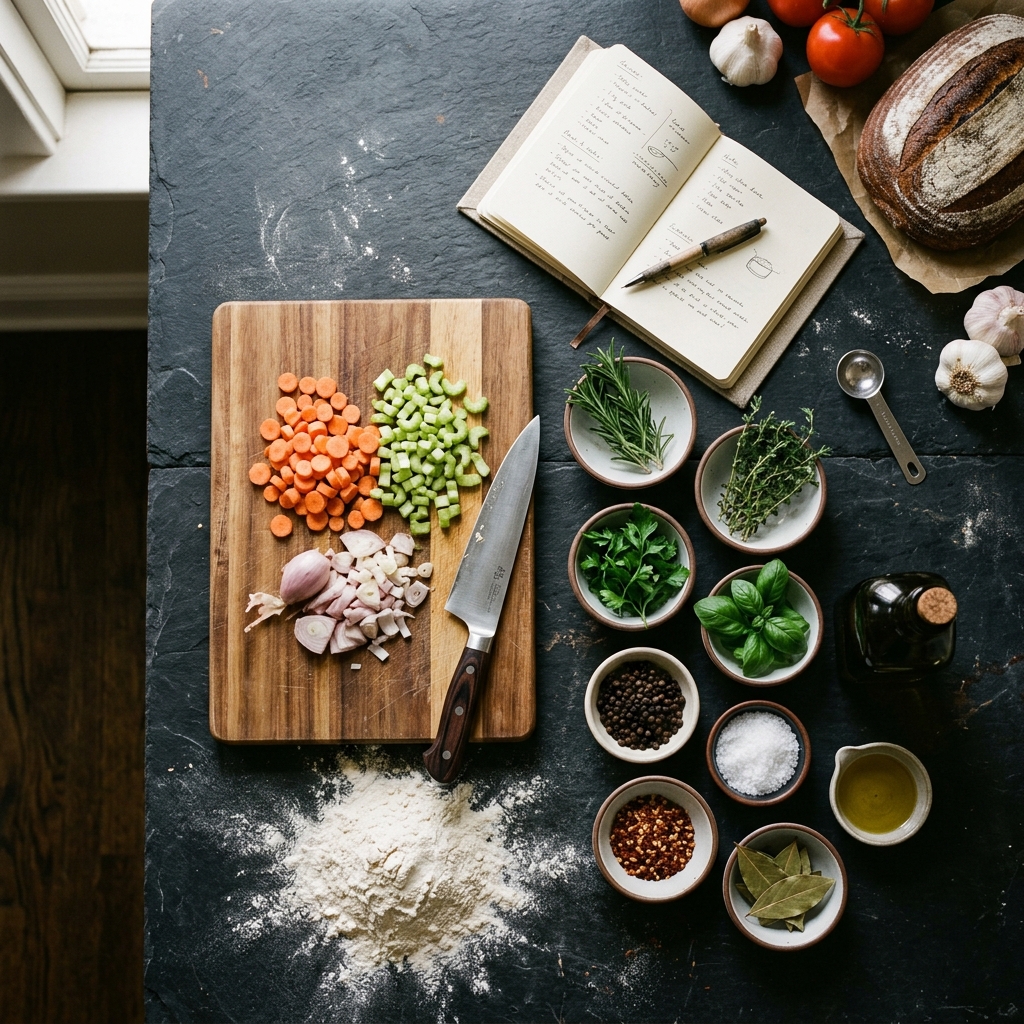
A practical guide to building with clarity, discipline, and commercial realism.
Starting a food business is often treated as a creative act. Someone has a recipe, a cuisine, a café idea, a family tradition, a restaurant concept, a product, a bakery format, a cloud kitchen plan, or a vision for a new kind of hospitality experience. That creative spark matters. Food businesses need taste, personality, story, care, and conviction.
But creativity is not enough.
A food business is also a commercial system. It involves margins, rent, ingredients, labor, equipment, licenses, suppliers, operations, hygiene, packaging, distribution, guest experience, compliance, branding, cash flow, and constant execution. It is one of the most emotionally attractive industries to enter, but also one of the most operationally unforgiving.
Many food businesses do not fail because the food is bad. They fail because the model is unclear, the costs are underestimated, the location is wrong, the menu is too complex, the pricing is weak, the team is untrained, the supply chain is fragile, the founder is spread too thin, or the business launches before its foundations are ready.
“A checklist helps prevent that. Not because food can be reduced to a checklist, but because the discipline behind the business must be clear before the first customer arrives.”
This is a practical checklist for starting a food business with seriousness.
1. Define what kind of food business you are building
Before choosing a name, designing a logo, renting a space, or buying equipment, define the business model.
A food business can take many forms: restaurant, café, bakery, cloud kitchen, catering company, packaged food brand, meal subscription service, food truck, kiosk, quick-service outlet, fine dining concept, home-based production business, commercial kitchen brand, farm-to-table experience, or hospitality-led food destination.
Each model has different economics. A restaurant depends on location, service, seating, kitchen efficiency, average spend, and repeat visits. A cloud kitchen depends on delivery radius, packaging, platform commissions, order volume, speed, and menu engineering.
A packaged food brand depends on shelf life, production consistency, packaging, distribution, compliance, and retail or online acquisition costs. A catering business depends on sales relationships, event execution, logistics, staffing flexibility, and working capital. A café depends on footfall, routine, beverage margins, rent discipline, and daily consistency.
The first checklist question is simple: What exactly are you building? Not emotionally. Commercially.
You should be able to describe the business in one clear sentence:
“We are building a premium neighborhood bakery for daily repeat customers.”
“We are launching a delivery-first North Indian meal brand for office workers.”
“We are creating a small-format café focused on coffee, breakfast, and light meals.”
“We are starting a packaged sauce brand for modern home cooks.”
“We are building a catering business for corporate lunches and private events.”
Clarity at this stage prevents confusion later. If the business model is vague, every decision becomes harder: menu, pricing, equipment, staffing, branding, location, marketing, and capital allocation.
2. Identify the customer and the occasion
A food business does not serve “everyone.” It serves specific people in specific moments.
A customer may buy food for convenience, indulgence, celebration, health, comfort, status, routine, curiosity, nostalgia, gifting, travel, work, or social experience. The same person may behave very differently across occasions. A customer ordering lunch at work is not the same as the same customer choosing a birthday dinner.
You need to know the occasion you are serving. Is this weekday lunch? Weekend dining?
Daily coffee? Late-night delivery? Office catering?
Family celebration? Premium gifting? Healthy meal prep?
Tourist dining? Student snacking? Airport convenience?
Neighborhood breakfast? Wedding events?
The occasion determines willingness to pay, service expectations, packaging needs, portion size, menu structure, speed, and repeat frequency.
A food business becomes stronger when it understands the customer’s real problem.
Not “people like biryani.” The sharper version is: “Busy professionals in this office district need reliable, high-quality lunch that feels satisfying but not too heavy, delivered within 30 minutes, at a predictable price.”
Not “people want desserts.” The sharper version is: “Urban customers want premium celebration cakes that look elegant, taste consistent, photograph well, and can be ordered with confidence for important occasions.”
Not “people like cafés.” The sharper version is: “Local residents need a calm, dependable third place for coffee, work, informal meetings, and light food between 8 a.m. and 7 p.m.”
Food businesses win by matching food, format, price, and experience to a real occasion.
3. Validate demand before overcommitting
Demand validation should happen before major spending.
Many founders mistake encouragement for demand. Friends liking the food is not demand. Social media praise is not demand.
A good tasting session is not demand. Interest is not payment.
Validation means people are willing to buy, repeat, recommend, and pay enough for the business to work.
This can be tested in lean ways before committing to a large lease or expensive buildout. A packaged food brand can begin with small production batches and direct sales. A catering concept can start with limited private events.
A cloud kitchen can test a narrow delivery radius. A bakery can test weekly pre-orders. A restaurant concept can run pop-ups or limited tasting menus.
A café idea can be tested through market research, footfall study, competitor analysis, and menu pricing trials.
Validation should answer four questions:
Will people buy it?
Will they buy again?
Will they pay the price required for the business to survive?
Can the product be made consistently at scale?
A food business is not validated by one good day. It is validated by repeatable demand.
4. Study the market and competition
Competition is not only businesses selling the same cuisine. It includes every alternative the customer may choose for the same occasion. A lunch customer may compare your food with office canteens, delivery apps, home-cooked meals, nearby cafés, quick-service chains, or skipping lunch altogether. A dinner customer may compare restaurants across cuisines, ambience, price, convenience, and social value.
You need to understand your competitive set. Study pricing, menu structure, customer reviews, portion sizes, packaging, service speed, quality consistency, location strength, ambience, delivery radius, brand positioning, and customer complaints.
Reviews are especially useful. They reveal what customers value and what frustrates them: late delivery, poor packaging, inconsistent taste, small portions, rude service, cleanliness issues, confusing menus, high prices, weak ambience, or poor reservation handling.
The goal is not to copy competitors. The goal is to understand the market’s expectations and gaps.
A new food business should be able to answer: What do customers already have? What are they dissatisfied with? Where is the market overserved?
Where is it underserved? What can we do clearly better? What will we deliberately not compete on?
Without this understanding, the business may enter a crowded market with no clear reason to exist.
5. Build a simple, focused menu
A strong menu is not necessarily a large menu.
In early-stage food businesses, complexity is dangerous. Every additional item affects inventory, training, preparation, equipment, storage, waste, speed, quality control, and purchasing.
A focused menu is easier to execute, easier to price, easier to market, easier to train, and easier to improve. The menu should be designed around the business model.
A delivery brand needs items that travel well, hold temperature, photograph clearly, and survive packaging. A café needs items that are fast, consistent, and compatible with daily demand. A restaurant can offer more complexity, but only if the kitchen team, prep system, and pricing support it. A packaged food brand needs products with shelf stability, regulatory compliance, and repeatable production.
Every menu item should earn its place. Ask: Does this item fit the concept? Does it have good margins?
Can it be made consistently? Does it create operational burden? Does it require unique ingredients that increase waste?
Does it slow down service? Does it confuse the customer? Does it help the brand become more memorable?
A weak menu tries to please everyone. A strong menu gives customers enough choice without making the operation chaotic.
6. Calculate food cost and gross margin
Food cost discipline is non-negotiable.
Every item should be costed before launch. This means calculating the actual cost of ingredients, wastage, garnish, packaging, condiments, delivery platform commissions if applicable, and portion variance.
A dish that sells well but has poor margin can damage the business. A product that looks profitable on paper may become weak once wastage, packaging, refunds, discounts, and staff meals are included.
You need to know the gross margin of each item and the blended margin of the business.
This is especially important because food businesses face constant cost movement. Ingredient prices fluctuate. Packaging costs rise.
Delivery commissions reduce profitability. Rent and payroll are fixed pressures. Discounts can train customers to wait for lower prices.
Pricing should not be based only on what competitors charge. It should be based on cost, value, positioning, willingness to pay, and required margin.
“Underpricing is one of the most common founder mistakes. It feels customer-friendly at first, but it leaves no room for quality, labor, marketing, rent, maintenance, or reinvestment. A business that cannot price sustainably is not generous. It is fragile.”
7. Choose the right location or production setup
Location matters differently depending on the food business model.
For a restaurant or café, location can define visibility, footfall, customer profile, convenience, rent burden, parking, delivery radius, and brand perception. For a cloud kitchen, frontage matters less than logistics, delivery access, kitchen suitability, utilities, and rent efficiency. For packaged food, production setup, compliance, storage, transport, and distribution matter more than consumer-facing location.
A good location is not simply a busy location. It is a commercially suitable location.
A high-footfall area may still be wrong if rent is too high, the customer profile does not match the concept, parking is poor, permissions are unclear, or the space cannot support the kitchen. A cheaper location may be attractive but fail because customers cannot access it or delivery times are weak.
Before signing anything, assess: Rent as a percentage of projected revenue. Deposit and lock-in terms. Permitted use and licensing feasibility.
Kitchen infrastructure. Water, drainage, ventilation, electricity, gas, exhaust, and waste disposal. Fire and safety compliance.
Storage space. Delivery access. Customer access.
Visibility and signage. Parking or pickup convenience. Competition nearby.
Staff commuting feasibility.
A food business can survive many challenges. A bad lease is harder to survive.
8. Understand licenses and compliance
Food businesses carry serious compliance obligations.
Requirements vary by country, state, and city, but they may include food safety registration, trade licenses, health permits, fire safety approvals, labor compliance, tax registrations, signage permissions, music licenses, alcohol licenses, packaging and labeling requirements, environmental rules, waste disposal norms, and local municipal permissions.
Compliance should be addressed early. Not after opening.
Operating without proper permissions can lead to fines, closure, reputational damage, insurance issues, and difficulty raising capital or expanding later.
Food safety is especially important. Poor hygiene can destroy trust quickly. Systems must cover storage temperatures, cleaning schedules, pest control, staff hygiene, ingredient traceability, allergen handling, expiration control, water quality, equipment sanitation, and safe food handling.
A serious food business treats compliance as operational infrastructure. Not paperwork.
9. Plan the kitchen and equipment carefully
Kitchen planning should follow the menu, not ego.
Many founders overspend on equipment before understanding actual production needs. Others underinvest and create daily operational bottlenecks. Both are dangerous.
The kitchen layout should support speed, hygiene, safety, workflow, storage, cleaning, and future demand. Staff should be able to move efficiently from receiving to storage, prep, cooking, plating or packing, dispatch, washing, and waste handling.
Equipment should be chosen based on the menu, volume, service style, power requirements, maintenance needs, and available space. Avoid buying equipment only because it looks professional. Every machine should serve the operating model.
For a delivery kitchen, packaging and dispatch flow are critical. For a bakery, ovens, proofing, cooling, storage, and production timing matter. For a café, beverage equipment, counter flow, refrigeration, and speed matter. For a restaurant, kitchen sections, prep capacity, dishwashing, exhaust, and service coordination matter.
A poorly planned kitchen creates invisible losses every day. Slow ticket times. Staff fatigue.
Food inconsistency. Higher wastage. Cleaning difficulty.
Safety risks. Poor guest experience.
Kitchen design is business design.
10. Build reliable supplier relationships
Food businesses depend on suppliers. Quality, consistency, pricing, credit terms, delivery timing, backup availability, and communication all affect the business. A good supplier can stabilize operations. A weak supplier can damage the guest experience.
Do not rely on a single supplier for critical ingredients unless there is a strong reason. Build backups.
Document specifications for key ingredients. Define acceptable quality, size, freshness, packaging, delivery timing, and rejection rules. Track price changes.
Compare periodically. Avoid supplier relationships that are informal to the point of being risky.
The supply chain should support the promise of the brand. A premium bakery cannot have inconsistent butter and chocolate quality. A health-focused brand cannot have unreliable produce.
A coffee business cannot ignore bean quality and equipment servicing. A restaurant built around regional ingredients needs a credible sourcing model.
Ingredient quality is not a romantic detail. It is the foundation of consistency.
11. Design the brand around trust and clarity
Branding is not only the logo. For a food business, brand is the total expectation created before the first bite.
It includes name, positioning, menu language, photography, packaging, space design, staff behavior, tone of communication, pricing, delivery experience, online presence, and the way problems are handled.
A good brand helps customers understand what the business stands for and why it is worth choosing. The brand should be clear, not overcomplicated. A new food business does not need a heavy philosophy if the basics are weak. It needs a credible identity, a clear promise, good product presentation, and consistent execution.
Ask: What do we want customers to feel? What should they remember? What do we do better than alternatives?
What words should customers use to describe us? Does the brand match the price? Does the visual identity match the actual experience?
Does the packaging or space create trust? Does the menu language help or confuse?
Branding cannot compensate for poor food or operations. But strong branding can increase perceived value when the product is genuinely good.
12. Set up sales and distribution before launch
A food business needs demand from day one. Do not wait until opening to think about sales.
Distribution depends on the model. A restaurant may need local awareness, reservations, Google presence, social media, partnerships, launch events, influencer tastings, neighborhood outreach, and corporate relationships. A cloud kitchen needs delivery platform setup, search visibility, menu photography, packaging trials, delivery timing tests, and repeat-order strategy.
A packaged food brand needs online sales, retail partnerships, sampling, subscriptions, marketplaces, or distributor relationships. A catering business needs direct outreach to companies, event planners, venues, communities, and high-value clients.
“A launch without distribution is simply opening the door and hoping. Hope is not a sales strategy.”
The business should have a launch plan covering: Who will buy first? How will they discover us? What offer or reason will create trial?
How will we collect feedback? How will we drive repeat orders? How will we build reviews?
How will we measure demand?
Early customers are not only revenue. They are data.
13. Hire slowly, train seriously
Food businesses are people businesses. Even delivery brands depend on human execution. Restaurants and cafés depend even more heavily on staff behavior, timing, hygiene, communication, and care.
Hiring should match the operating model. A small food business does not need a large team, but it does need dependable people with clear responsibilities.
Training matters more than many founders expect. Staff should know recipes, portion sizes, hygiene rules, guest communication, opening and closing routines, cleaning standards, packaging rules, complaint handling, emergency procedures, and basic brand expectations.
Do not assume people will “figure it out.” They will create their own system if you do not create one. That usually leads to inconsistency.
A new food business should have simple standard operating procedures for the most important tasks. Not corporate bureaucracy. Just clear, repeatable instructions. Consistency is built before service begins.
14. Create systems for daily operations
Food businesses are won or lost in daily repetition. Ordering. Receiving.
Prep. Cooking. Packing.
Cleaning. Billing. Staff scheduling.
Inventory. Waste tracking. Cash handling.
Guest feedback. Maintenance. Vendor follow-up.
Review response. Sales reporting.
These need systems. Simple systems are enough at the beginning, but they must be used consistently.
At minimum, track: Daily sales. Item-wise sales. Food cost.
Wastage. Inventory. Customer complaints.
Refunds. Delivery delays. Staff attendance.
Supplier issues. Cash flow. Maintenance problems.
Without tracking, the founder operates on feeling. Feeling is useful in food. It is dangerous in finance and operations.
15. Protect cash flow
Cash flow is one of the biggest risks in food businesses.
The business may have revenue but still run out of cash because of rent deposits, equipment purchases, supplier payments, salaries, marketing costs, platform settlements, refunds, repairs, taxes, and delayed receivables.
Catering and B2B food businesses are especially vulnerable to payment delays. Restaurants and cafés face daily operating costs. Packaged food brands often tie up capital in inventory, packaging, and distribution.
Before launch, calculate how much working capital is needed for at least the early operating period. Do not spend all capital on interiors, branding, or equipment. The business needs breathing room after opening.
Cash discipline includes: Keeping fixed costs low. Avoiding unnecessary menu complexity. Negotiating supplier terms.
Controlling inventory. Watching discounts. Collecting payments promptly.
Reviewing profitability weekly. Avoiding vanity spending.
A food business can survive slow growth. It may not survive cash exhaustion.
16. Test before full launch
A soft launch is valuable. It allows the business to test food consistency, service flow, packaging, staff readiness, pricing, customer response, kitchen timing, and operational bottlenecks before full exposure.
A soft launch should be structured. Invite a limited number of customers. Track feedback.
Measure preparation time. Watch what customers leave unfinished. See which items confuse people.
Test delivery packaging. Review complaints. Adjust menu descriptions.
Train staff again. Fix operational gaps.
Do not treat the first day as a performance. Treat it as a controlled test. The goal is not applause. The goal is readiness.
17. Listen to feedback, but filter it carefully
Customer feedback is essential, but not all feedback is equal.
Some feedback reveals real problems. Some reflects personal taste. Some customers are not your target audience. Some suggestions would make the business less focused.
The founder’s job is to listen carefully without becoming reactive. Look for patterns.
If many customers say an item is too salty, slow, expensive, confusing, poorly packed, or inconsistent, act quickly. If one customer wants a completely different cuisine, that may not matter.
Feedback should improve the concept, not dilute it. A food business must evolve, but it should not lose its core.
18. Measure what matters
Early-stage founders often track vanity metrics: likes, followers, launch-day crowd, compliments, or total orders. The more important metrics are commercial and operational.
Track: Repeat customers. Average order value. Gross margin.
Net margin. Food cost percentage. Labor cost.
Rent burden. Waste. Delivery time.
Complaint rate. Refund rate. Customer acquisition cost.
Channel profitability. Best-selling and worst-selling items. Peak demand hours.
Review quality.
These numbers reveal the real health of the business.
A busy food business is not automatically a profitable food business. Revenue without margin is stress.
19. Avoid the common early mistakes
Most food business mistakes are predictable.
Launching with too many menu items. Overspending on interiors before validating demand. Choosing a bad lease.
Underpricing. Ignoring food cost. Depending too much on delivery platforms.
Hiring too many people too early. Weak hygiene systems. Poor packaging.
No supplier backups. No working capital. No clear target customer.
No repeat strategy. No operational documentation. Expanding before stabilizing.
Confusing social media attention with sustainable demand.
The best founders avoid unnecessary complexity. They start focused, learn quickly, improve daily, and expand only when the model is proven.
20. Build for repeatability, not just launch excitement
The launch is not the business. The business begins after the launch, when the excitement fades and daily execution begins.
Can the food be made consistently? Can customers trust the experience? Can the team repeat the standard without the founder doing everything?
Can the business generate profit after rent, salaries, ingredients, marketing, maintenance, and taxes? Can the concept remain relevant beyond the first wave of curiosity?
A food business becomes valuable when it becomes repeatable. Repeatable product. Repeatable service.
Repeatable demand. Repeatable margins. Repeatable operations.
That is the difference between a food project and a food business.
Final checklist before you start
Before launching, you should be able to answer these questions clearly:
What food business model are we building? Who is the target customer? What specific occasion are we serving?
Why will customers choose us over alternatives? Is there evidence of demand? What is the focused menu?
What is the cost and margin of each item? What is the required monthly revenue to break even? What are the fixed costs?
What licenses and approvals are required? Is the location or production setup commercially suitable? Is the kitchen designed for the actual menu?
Are suppliers reliable? Is packaging tested? Is pricing sustainable?
Is the team trained? Are operating procedures documented? Is distribution ready before launch?
Do we have enough working capital after setup? How will we measure performance? How will we drive repeat customers?
What will we deliberately not do yet?
“That last question is important. A disciplined food business is defined not only by what it does, but by what it refuses to do too early.”
The real standard
Starting a food business is not easy. It asks for creativity, taste, stamina, commercial discipline, and operational humility. It requires the founder to care deeply about the product while still respecting the numbers.
It requires generosity toward customers and toughness with costs. It requires brand thinking and kitchen discipline. It requires speed without carelessness.
The food itself matters. But the business around the food matters just as much.
A strong food business begins with a clear concept, a real customer, a focused menu, sustainable pricing, reliable suppliers, disciplined operations, and enough cash to survive the early learning period.
The goal is not just to open. The goal is to stay open, improve, earn trust, and become part of people’s routines, celebrations, cravings, and memories.
That is the real checklist. Not just whether the business can launch. Whether it deserves to last.