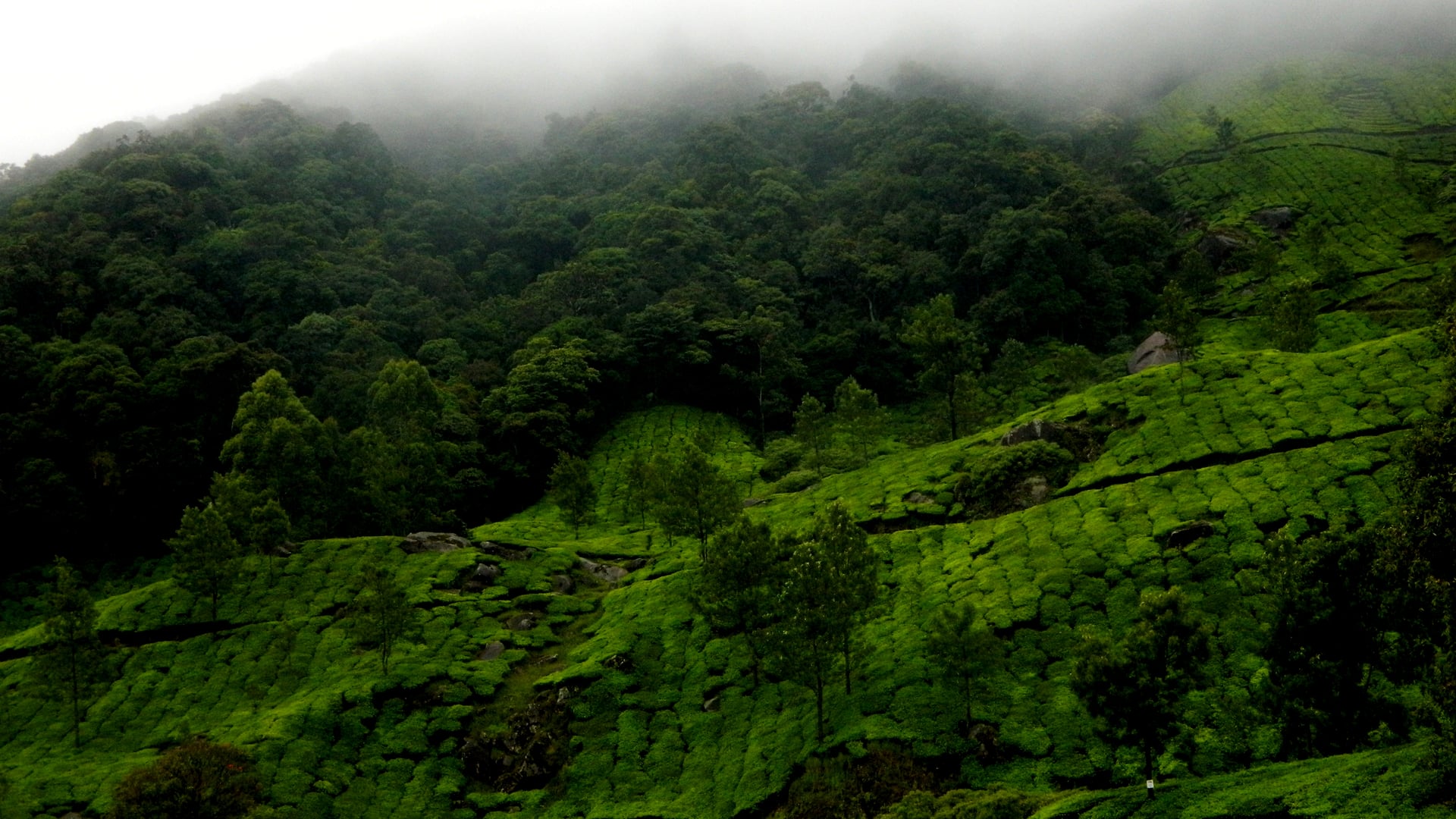
Can a Coffee Plantation in Coorg Become a Hospitality Business?
An institutional guide to transforming a working Coorg coffee estate into a dual-revenue agri-hospitality asset: dual P&L underwriting (plantation + rooms), 6-key bungalow economics, legal conversion scrutiny, and invisible water/drainage infrastructure.
By Guzlands Editorial
Coorg, officially Kodagu, is one of India's most established coffee-growing regions and one of the few places where agriculture and hospitality can naturally exist on the same property. That makes coffee plantations particularly interesting from a hospitality real estate perspective. A working estate can potentially generate income from coffee while also supporting accommodation, food and beverage, farm experiences, events and other destination-led businesses. But the opportunity is more complex than simply purchasing agricultural land and adding a few cottages. A coffee estate is first an agricultural asset, and any hospitality use has to be assessed against land records, applicable planning and revenue requirements, infrastructure, environmental conditions and the economics of the existing plantation. Kodagu's coffee industry is substantial. The district government states that coffee is cultivated across , with approximately under coffee, representing about . The district produces roughly , accounting for around half of Karnataka's production and approximately 35% of India's production according to the district's Coffee Board information. The Coffee Board's latest estimates put Kodagu's 2025–26 coffee production at approximately , with Robusta accounting for the overwhelming majority. This scale matters because a coffee plantation in Coorg is not simply scenic land. It is part of a significant agricultural economy, and that agricultural identity can become the foundation of a hospitality proposition. The emerging opportunity is therefore not to replace the plantation with a hotel, but to understand whether hospitality can be layered onto the estate without compromising the agricultural business or the legal and ecological character of the land.
A Coffee Estate Is Different From a Hotel With Coffee Plants
The first distinction investors need to make is between a genuine working plantation and a hospitality property that happens to sit among coffee plants. The two can look similar in a listing, but their economics are fundamentally different. A working estate derives its primary agricultural value from coffee, often alongside pepper, cardamom, fruit trees, timber or other crops. Hospitality is an additional business. A conventional resort located on plantation land may operate primarily as a hotel, with the coffee landscape functioning mostly as scenery. For an investor, that distinction matters because the property's economic engine is different. A working estate can potentially produce agricultural income even when occupancy is low. Hospitality can then provide a second revenue stream, but it also introduces capital expenditure, staffing, compliance and operational complexity. The combination can be attractive because the two businesses operate on different cycles. Coffee production follows an agricultural calendar, while accommodation can generate revenue throughout the year. The land therefore has multiple productive functions. However, the agricultural operation should not be reduced to landscaping. Coffee requires cultivation, labour, pruning, shade management, harvesting, processing and post-harvest activities. The estate's productivity has to be understood before hospitality is added. Kodagu's Coffee Board data illustrates the scale of the agricultural operation: the district's average five-year productivity is reported at approximately , with major differences between Arabica and Robusta-growing areas. The hospitality business needs to be designed around that reality. Guest activities, paths, buildings and landscape interventions should coexist with the plantation rather than interfere with core agricultural operations. The strongest estate hospitality concepts are therefore usually built around the plantation's existing identity rather than attempting to turn an agricultural property into a generic resort.
The Underlying Real Estate Can Have More Than One Economic Layer
A coffee plantation can contain several forms of value simultaneously. There is the value of the agricultural land, the productive coffee crop, existing buildings, water resources, access infrastructure, timber or other plantation assets, and potentially the hospitality opportunity. This makes valuation more complicated than a simple calculation based on price per acre. Suppose an estate has , an existing planter's bungalow and reasonable road access. The land may have agricultural value independent of hospitality. The bungalow may have heritage or conversion value. The plantation itself may generate annual coffee income. Hospitality could then create an additional source of revenue from accommodation, food or experiences. The investment case depends on the interaction between those layers. This is particularly important because current asking prices for Coorg coffee estates can vary considerably by location, acreage, plantation quality and existing structures. For example, recent market listings include a , approximately ₹45 lakh per acre, and a , approximately ₹38.1 lakh per acre. Other listings show larger estates at approximately ₹35–60 lakh per acre, depending on location and property characteristics. These are asking prices from individual listings, not transaction benchmarks, and they should not be treated as market averages. They demonstrate, however, why a hospitality investor needs to examine the entire asset rather than assuming all coffee land has the same value. A 10-acre estate with a functioning bungalow, lake and good road access is a very different proposition from 10 acres of plantation without a suitable building. The potential hospitality value may be driven less by the acreage itself and more by what the acreage supports.
The Bungalow May Be More Important Than the Coffee Yield
Many established Coorg plantations contain homes that have been built over decades. Some are traditional planter's bungalows, family residences or estate houses with mature trees, verandas, courtyards and views into the plantation. These buildings can be commercially important because they provide an existing structure around which hospitality can be developed. Converting an existing bungalow into a premium estate stay can sometimes require significantly less capital than developing a new hospitality structure, while also preserving characteristics that are difficult to reproduce through new construction. A historic building can become part of the customer proposition. The architecture, family history, furniture, plantation setting and relationship with the estate can create differentiation before any new facility is built. This is one reason estate-based hospitality can command a premium over generic accommodation. The guest is not simply renting a room. They are gaining access to a working landscape and a property with a specific identity. However, the building must be evaluated technically. Older structures can require major plumbing, electrical, roofing, drainage and waterproofing work. They may have small bathrooms, inefficient circulation or limited service areas. A charming bungalow can therefore become an expensive hospitality conversion if the structure does not support modern guest requirements. Investors should also determine whether the existing building can legally be used for the intended hospitality purpose. Current Karnataka tourism guidance for homestays places emphasis on registration and compliance and explicitly frames homestays around authentic local culture, traditions and food systems. The right estate bungalow can therefore be a strong hospitality asset, but its commercial potential has to be assessed alongside its legal and technical constraints.
How Many Rooms Does a Coffee Estate Need?
A coffee estate does not necessarily need a large number of rooms to become commercially interesting. In fact, a small number of high-value rooms can be more appropriate than a conventional 50- or 100-room resort. The reason is simple: the plantation itself creates part of the guest experience. There is an upper limit to how much construction the estate can absorb before the agricultural character begins to disappear. A can potentially offer more exclusivity than a 40-room resort while requiring substantially less built infrastructure. Assume six rooms with an average realised rate of and 50% annual occupancy. There are 2,190 available room nights per year, of which approximately 1,095 are sold. Annual room revenue would therefore be around . At ₹10,000 ADR, the same occupancy produces approximately . At 60% occupancy and ₹10,000 ADR, annual room revenue increases to approximately . These figures represent accommodation revenue before operating costs, commissions, taxes and other expenses. They illustrate why estate hospitality does not necessarily depend on scale. A relatively small number of rooms can generate meaningful revenue when the setting supports premium pricing. The challenge is determining whether the property can actually achieve that ADR. The guest needs more than coffee plants outside the window. The experience may need to include architecture, food, plantation walks, coffee processing, nature, privacy and high-quality service. The property also needs to remain accessible enough to attract guests. A remote estate with exceptional character may command a premium, but the harder journey needs to be part of a compelling destination proposition rather than an operational inconvenience. The most attractive estate projects therefore tend to focus on rather than maximising room count.
Coffee Itself Can Become Part of the Guest Experience
Coffee gives a Coorg hospitality property something that many destination accommodations have to manufacture: a genuine connection between the product and the land. The crop can influence the guest experience across the entire stay. Visitors can see the plantation, understand cultivation, walk through the estate, observe harvesting and processing where appropriate, taste different preparations and potentially purchase coffee produced on the property. Karnataka Tourism actively promotes Kodagu as a coffee destination and highlights estate walks, coffee cultivation, harvesting, roasting and plantation stays as part of the regional experience. This creates commercial possibilities beyond the room. A property could potentially sell estate coffee directly to guests, offer tastings, create curated breakfasts, host small coffee workshops or build a retail component around its own production, subject to the relevant food and business requirements. The economics can be attractive because the hospitality business is adding value to an existing agricultural product rather than creating an entirely new product category. However, the estate's coffee operation needs to be genuine. Customers are increasingly capable of distinguishing between a working plantation and a resort using coffee imagery as decoration. The strongest proposition comes from allowing agriculture to remain visible without turning the farm into theatre. Guests should see how the estate actually works, within appropriate safety and operational boundaries. This authenticity can also strengthen the property's brand. A coffee plantation with its own crop has a story that a generic resort cannot easily replicate. For investors, that story has commercial value when it supports higher ADR, additional spend and repeat visitation. The key is that the coffee should be an operating reality first and a marketing asset second.
The Plantation Can Support More Than Accommodation
The hospitality opportunity on a coffee estate does not have to stop at accommodation. The land can potentially support a broader ecosystem involving food, experiences and events, depending on the property's size, approvals and operating model. A restaurant can use estate-grown coffee and locally sourced ingredients. A small café can serve as a destination for visitors who are not staying overnight. A coffee-processing experience can become an educational product. A plantation walk can be bundled into a stay. A farm-to-table programme can connect agriculture and hospitality. A larger estate might be able to support small retreats or private events. The important principle is that each additional use needs to reinforce the underlying identity of the property. A coffee estate with a six-room stay and an excellent restaurant can create a coherent proposition because coffee, food and accommodation all belong to the same ecosystem. Adding a large event venue may be much less compatible if it introduces traffic, noise and infrastructure requirements that fundamentally change the character of the estate. The physical layout matters as well. Guest areas should not interfere with plantation activity. Service routes should be separated where possible. Restaurants need appropriate kitchen infrastructure. Event spaces need parking and access. Agricultural activities need uninterrupted operating areas. This is where the concept of a multi-use hospitality property becomes useful. The objective is not to maximise the number of businesses on the estate. It is to maximise the productive use of the land and infrastructure while protecting the core value of the property. When the uses are complementary, one business can help create demand for another. Guests staying at the estate may dine at the restaurant, purchase coffee and participate in experiences. Outside visitors may discover the restaurant and later return for an estate stay.
Water and Agricultural Infrastructure Matter More Than the View
Coffee plantations depend on land and water management, while hospitality adds another layer of water demand through bathrooms, kitchens, laundry, landscaping and potentially pools. This creates a resource-management issue that needs to be considered before the property is acquired. An estate that is sufficient for agriculture may not have enough water infrastructure for a hospitality operation with high occupancy. Similarly, adding buildings can change drainage patterns, road surfaces and how water moves through the site. A hospitality investor needs to understand existing water sources, storage, pumping, wastewater systems and seasonal variation. The same applies to electricity. An estate may have enough power for a family home and agricultural machinery but require additional capacity for guest rooms, air-conditioning, refrigeration, kitchen equipment and hot-water systems. These costs can be significant because upgrading infrastructure in rural locations can be more complicated than making similar changes in urban properties. The estate's internal road network also matters. Plantation roads designed for agricultural vehicles are not automatically suitable for guest cars. Bridges, culverts, slopes and drainage need to be assessed. A property can therefore look ready for hospitality while requiring substantial infrastructure expenditure before it is actually ready for guests. Investors should model these costs early. A ₹2 crore estate that requires another ₹50 lakh for infrastructure and conversion has a fundamentally different basis from a ₹2.5 crore property that already has appropriate systems. The broader lesson is that in agricultural hospitality, . The quality of the guest room matters, but the ability to reliably provide water, power, access and waste management matters just as much.
The Legal Question Is More Complicated Than “Can I Build a Cottage?”
This is one of the most important considerations for anyone looking at coffee plantations in Coorg. Agricultural and plantation land should not be treated as if it were unrestricted hospitality development land. The legal feasibility of introducing accommodation, restaurants or other commercial uses depends on the specific property, land records, applicable legislation, planning requirements, permissions and the intended nature of the development. Kodagu's Town and Country Planning Department specifically provides technical input to the Revenue Department concerning the conversion of agricultural land to non-agricultural purposes. There is also active legal scrutiny around the conversion of coffee plantation land. In June 2026, the Karnataka High Court raised concerns regarding the treatment of coffee plantation land in Kodagu for conversion purposes and observed that indiscriminate conversion could alter the ecological and geographical character of the region. This makes legal due diligence particularly important. An investor should not assume that a coffee estate can simply be converted into a resort because another property nearby has done so. The exact land classification, title, existing structures, proposed use, development extent and permissions need to be examined on their own facts. This is also why a hospitality concept should be designed after the legal feasibility of the property is understood. Building a business plan around 15 villas and then discovering that only the existing residential structure can practically be used is an expensive mistake. In estate hospitality, the first feasibility question should be Only after that should the investment case be developed.
Buying the Estate for Coffee and Adding Hospitality Is a Different Investment From Buying a Resort
The intended purpose of acquisition changes the entire financial model. An investor buying a coffee estate primarily for agricultural income may be willing to accept a relatively modest hospitality contribution because the underlying plantation is the core asset. Another investor buying primarily for hospitality needs the accommodation and F&B business to justify the majority of the acquisition cost. These are different strategies. Consider a 20-acre estate costing , including a functioning plantation and existing residence. Assume the agricultural operation produces a variable annual income based on coffee prices and yields, while the hospitality component is developed with another ₹1.5 crore. The total project basis becomes ₹9.5 crore. If a six-room hospitality operation generates ₹1.1 crore in gross room revenue and the plantation provides a separate agricultural income stream, the asset may justify its valuation through multiple sources of cash flow and long-term land value. But if the investor pays ₹8 crore for a property simply because they intend to create a six-room hotel, the room revenue alone may not justify the capital. The agricultural value needs to be understood separately. This is why estate investment requires a . The first model should assess plantation economics: acreage, crop mix, yield, historical production, labour, input costs, processing arrangements and coffee realisations. The second should assess hospitality economics: rooms, ADR, occupancy, F&B, staffing, capital expenditure and operating margin. The two models can then be integrated. This is more rigorous than treating the entire property as a resort site. It also creates a better framework for valuing downside. If hospitality demand is weaker than expected, the plantation still retains an agricultural function. If coffee prices or production decline, the hospitality business can provide additional income. The asset's diversification can therefore become part of its investment thesis.
The Numbers Can Work Without a Large Resort
A well-designed estate stay does not necessarily require dozens of rooms. Consider a with an average realised ADR of ₹9,000 and annual occupancy of 50%. At 3,650 available room nights, the property would sell approximately 1,825 room nights and produce . If F&B and experiences contribute an additional 20%, total gross revenue could approach . Suppose the combined operating costs consume 60%, leaving approximately . This is only a hypothetical model, but it shows the potential economics of a small estate hospitality business. Now consider the total capital required. If the existing plantation and residence are already owned and the conversion requires ₹1.2 crore, the investment case can look quite different from an acquisition project requiring ₹5–10 crore of real estate capital. A buyer paying a significant premium for the estate needs additional value beyond the rooms. That value could come from coffee production, land appreciation, an exceptional existing bungalow, additional permitted development or other uses. The key is to identify which part of the asset is driving the return. This distinction matters because estate hospitality can appear highly profitable when room revenue is considered without accounting for the underlying land cost. A six-room hotel producing ₹1 crore of annual accommodation revenue sounds attractive. A ₹6 crore acquisition generating that revenue is a different proposition. The property's agricultural and real estate values may justify the acquisition, but those should be recognised explicitly rather than hidden inside the hospitality calculation.
Coorg's Plantation Geography Creates Different Opportunities
Coorg's coffee-growing landscape is not uniform. The district's Coffee Board information shows differences in crop mix and productivity between Madikeri, Somwarpet, Kushalnagar, Virajpet and Ponnampet. Robusta is dominant in much of Virajpet and Ponnampet, while Arabica has a much stronger presence around Somwarpet. This matters from a hospitality perspective because geography affects both the agricultural identity of the property and the tourism proposition. Karnataka Tourism specifically identifies , highlighting coffee estates, spice cultivation and family-run plantation stays. Investors can therefore look beyond Madikeri when assessing estate hospitality opportunities. A property farther from the main tourism centre may have lower visibility but potentially stronger plantation authenticity, larger land parcels or lower acquisition costs. The trade-off is access. If the estate is too difficult to reach, the operator may face higher customer-acquisition and transport costs. The strongest opportunities may therefore sit in locations that balance agricultural character with reasonable road connectivity. This is where property selection becomes more important than destination branding. The investor is not simply buying “a Coorg property.” They are buying a particular relationship between plantation, road, town, surrounding tourism, agricultural productivity and existing built assets. A 10-acre estate near a strong road connection can have a completely different hospitality proposition from a 10-acre estate several kilometres deeper into plantation country, even if the underlying agricultural characteristics are comparable.
The Guest Experience Should Begin With the Estate
A plantation stay becomes commercially stronger when the property itself explains why the guest should come. This does not require elaborate programming. The coffee estate can provide the foundation: walking through the plantation, understanding shade-grown coffee, tasting the crop, eating food influenced by the region and staying in a building connected to the estate's history. Karnataka Tourism's current description of Kodagu explicitly highlights coffee cultivation, plantation walks, traditional homes and local cuisine as part of the destination experience. This provides a useful direction for estate hospitality without requiring the operator to manufacture artificial attractions. The strongest properties often use existing assets intelligently. A working coffee yard can become an educational element. A planter's bungalow can become accommodation. A kitchen can become part of the food experience. An orchard can supply breakfast. A stream or forest edge can create a walking route. These elements are valuable because they are already embedded in the property. The operator is simply making them accessible to guests in a structured way. This can also reduce the amount of capital required to create differentiation. Instead of building a swimming pool because every resort seems to have one, an estate operator may invest in better rooms, bathrooms, food and guided plantation experiences. The experience comes from the land rather than from expensive imported amenities. This model can be commercially attractive because it supports a stronger sense of place while potentially reducing unnecessary construction. The property becomes a destination without losing the characteristics that made the estate valuable in the first place.
A Coffee Estate Can Become an Agrihood, but the Model Needs Discipline
The broader opportunity extends beyond plantation stays into what could be described as an agrihood: a hospitality property in which agriculture is an operating component rather than simply a background landscape. In Coorg, a coffee estate can potentially integrate accommodation, food production, agriculture, processing and guest experiences into one system. The concept becomes particularly interesting when multiple parts of the estate supply one another. Coffee produced on the property can be served to guests and sold as a product. Pepper, cardamom, fruits or vegetables can enter the kitchen. Farm waste can potentially be used within appropriate agricultural systems. Guests can participate in carefully designed educational experiences. Accommodation creates an audience for the agricultural operation, while the agricultural operation gives the accommodation a distinctive proposition. This is the economic logic of an agrihood. However, investors should avoid making the agricultural element decorative. If agriculture is central to the concept, it should have measurable output and a genuine role in the operation. Otherwise, the business is simply a resort with a garden. The model also requires careful land-use planning and legal verification. Agricultural operations should not be compromised by unnecessary construction, excessive traffic or guest activity. The best estate projects tend to maintain a relatively low development footprint and derive more value from the quality of the experience than from the quantity of built area. This can also improve long-term resilience. A property with productive agriculture and hospitality has two related but distinct economic engines. That diversity can be valuable, provided both businesses are managed professionally and the property remains within the legal framework applicable to the land.
What Should Investors Look for in a Coorg Coffee Estate?
A hospitality-oriented coffee estate should be evaluated across several dimensions before acquisition. First is : acreage, coffee variety, bearing area, yield, irrigation, shade trees, labour requirements and processing arrangements. Second is : existing bungalow or structures, condition, room potential, architecture, views, landscaping and the relationship between buildings and plantation. Third is : road quality, travel time from major gateways, internal roads, parking and vehicle access. Fourth is : water, electricity, wastewater, drainage, internet, staff accommodation and agricultural systems. Fifth is : competing estate stays, room rates, seasonality, source markets and the reason a guest would choose the property. Sixth is : title, land classification, existing structures, applicable planning controls, conversion requirements and permissions for the proposed use. Finally, the investor should calculate the economics of both businesses. A coffee estate needs a plantation P&L. A hospitality property needs a hotel P&L. The combined investment case should then be tested under conservative assumptions. If coffee yields fall, does the asset remain viable? If occupancy is 35% instead of 55%, does the hospitality operation survive? If renovation costs increase by 20%, does the project still make sense? These questions are more useful than simply asking whether Coorg is a popular destination. The best estate investments are those that retain value across several scenarios because the underlying land, agriculture, property and hospitality opportunity each contribute something meaningful.
The Market Opportunity Is Not Just About Buying a Plantation
The increasing interest in Coorg's plantation stays suggests that the relationship between agriculture and hospitality is becoming commercially relevant. Recent travel coverage continues to highlight working coffee estates and plantation homes as a distinct accommodation category, while Karnataka Tourism itself promotes estate-based experiences in Kodagu. At the same time, current property listings show that coffee estates can command significant prices depending on acreage, location and existing improvements. This creates an interesting market for owners and investors. Some owners may have agricultural properties that are underutilised from a hospitality perspective. Some hospitality operators may be looking for properties that can provide a stronger connection to food and agriculture. Some investors may be interested in an asset with two complementary income streams rather than a conventional hotel. These are precisely the kinds of opportunities that conventional real estate categories can make difficult to discover. A property may be marketed simply as agricultural land even though it contains a house, road access, productive plantation and a plausible hospitality use. Another property may be marketed as a resort even though its underlying value is largely derived from a working coffee estate. Understanding the asset requires looking at the whole property rather than its current listing category. This is an important role for a specialist hospitality real estate marketplace: connecting the physical characteristics of land and buildings with the types of hospitality businesses they can realistically support.
The Strongest Coorg Hospitality Assets May Be the Ones That Keep the Coffee Business Intact
The fundamental opportunity in Coorg is not to replace agriculture with tourism. It is to identify properties where the two can coexist productively. The plantation provides land, landscape, food systems, history and a sense of place. Hospitality provides an additional way to monetise that environment without necessarily requiring a large development footprint. The combination can produce a differentiated business model in which coffee is both an agricultural product and part of the guest experience. But the success of that model depends on discipline. The property must be legally suitable for the intended use. Infrastructure must support both agriculture and hospitality. The acquisition cost must be justified by a combination of plantation value, property value and hospitality potential. The number of rooms should be determined by demand and the character of the estate rather than an ambition to maximise built area. And the guest experience should emerge from the actual property rather than from a generic resort template. Kodagu's scale as a coffee-producing district provides a substantial base for this opportunity, with more than and production exceeding . The most interesting properties may therefore be those where agriculture, land and hospitality reinforce one another rather than compete. For owners, this can create a new use for an existing estate. For investors, it can create exposure to multiple sources of value. For operators, it can provide a proposition that is difficult for conventional hotels to replicate.
Find the right property for your next venture.
Explore Properties